
When I Play For...
There is a song by a band called The 2 Johnnies that is getting a lot of play in our home at the moment. It’s called “When I Play for the County.”
Here in Ireland, if you play Gaelic Football or Hurling—the country’s two most popular sports—playing for your county is the ultimate prize. Although these are amateur sports and the athletes aren’t paid, these players are national heroes and celebrities. They play on national TV, and if they are lucky enough to reach the semi-finals or finals, they play in front of 88,000 screaming fans in the national stadium Croke Park.
My nine-year-old son’s dream of one day reaching the pinnacle of his sport is not uncommon for a boy his age. As a parent, it’s incredible to see him outside every day, playing, practicing, and dreaming of one day playing in the big match. It inspires so many healthy habits.
It is great to have dreams, but those dreams are inevitably related to doing, not being. They aren't focused on who they should be on the inside—their values and character—even though who they are on the inside shapes everything they will eventually do on the outside.
This struggle between being and doing starts early, and we innocently encourage it. The more we ask children, "What do you want to be when you grow up?" instead of "Who do you want to be?" the more we subtly anchor their identity in their performance, rather than their character.
My son asked me the other night, “Dad, do you think I’ll play for my county someday?”
Without hesitation, I said, “Absolutely. If you keep having fun, playing as often as you can, and working hard, I’ll be there watching you.”
I don’t regret instilling belief in my son. But reflecting on that conversation, I wish I had followed up with one more question: “And when you get there, what kind of teammate and person do you want to be?” It is a simple, powerful way to elevate the being over the doing.
In fact, I’m even starting to question how often my wife and I use the line “I love to watch you play” after games. It’s not that it's bad—it is actually a very positive, pressure-free way to reinforce joy.
But I feel challenged when I think about how author Bob Goff speaks to and inspires the people he mentors. He regularly uses this phrase: "I love who you are becoming."
I love the selfless teammate you are becoming.
I love the hardworking player you are becoming.
I love the joyful person you are becoming.
As Goff writes, “People grow where they are loved.”
If we only show love for what they are doing, they will strive to do more and achieve more to feel valued.
But if we love them for who they are becoming, they will be inspired to become the absolute best version of themselves.
—J.P. Nerbun
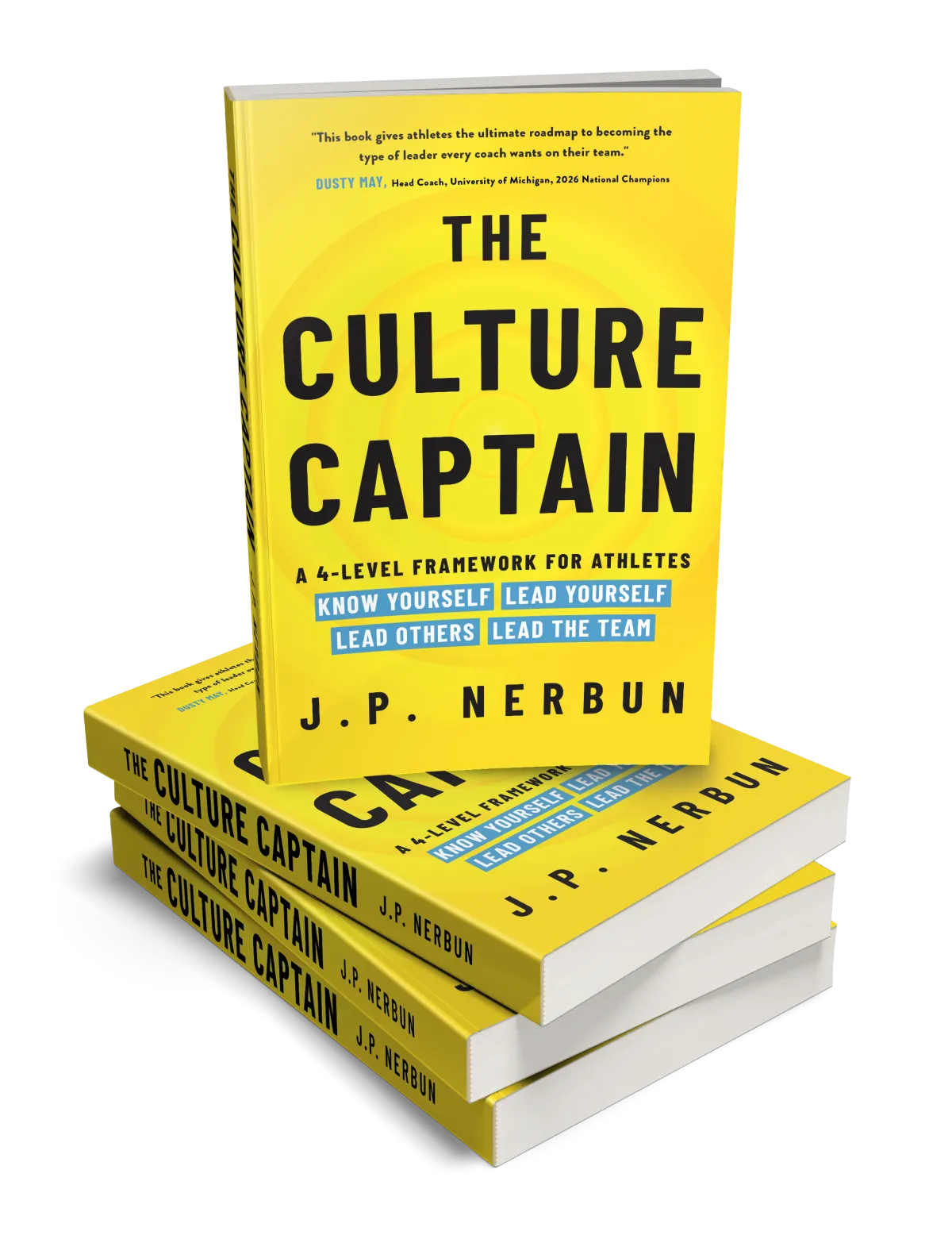
I am currently reading my new book, The Culture Captain, to my ten-year-old daughter, and she is loving it. While she might not grasp "all of it," it is clearly making an impact. I am excited to start reading it with my nine-year-old son next to help him turn down the dial on his intense competitiveness and help him focus on playing for the pure joy of the sport, being a great teammate and even a leader.
If you want to transform the conversations you are having with your kids and players around sports, this book provides a 4-Level Framework for Athletes to Know Yourself, Lead Yourself, Lead Others, Lead the Team.
"This book gives athletes the ultimate roadmap to becoming the type of leader every coach wants on their team." —Dusty May, 2026 NCAA National Championship Coach & Head Coach of the Dallas Mavericks


