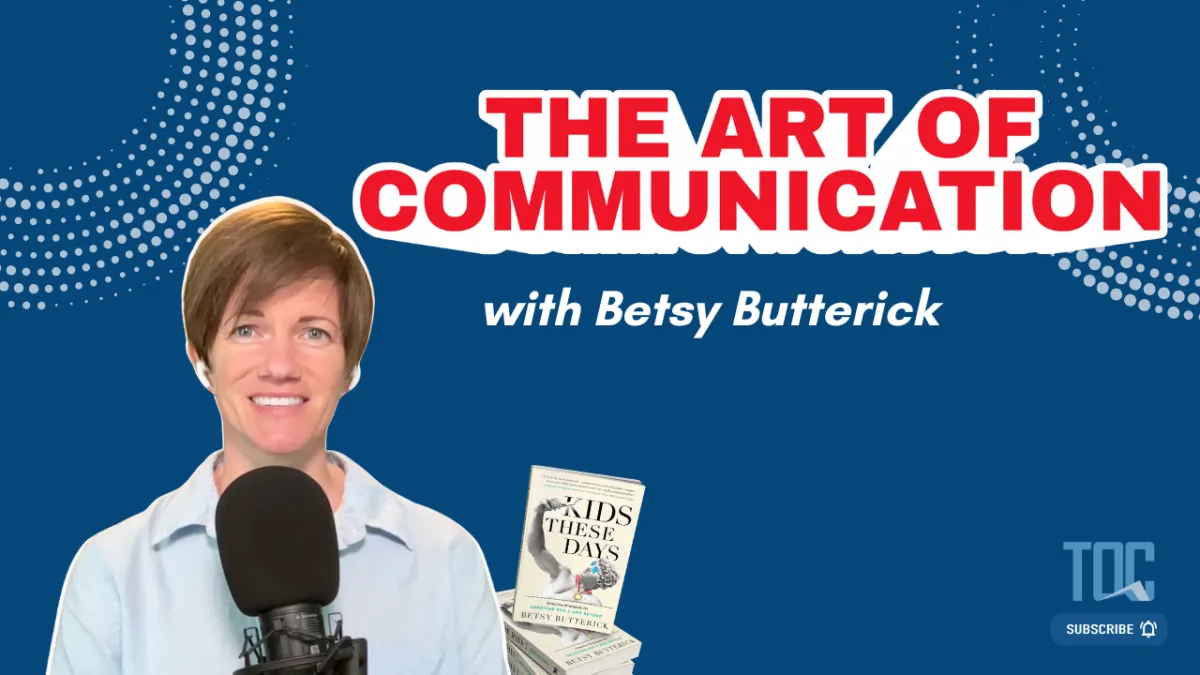
Episode 455: The Art of Communication |
Episode 455: The Art of Communication: Finding Your Voice as a Coach | Betsy Butterick
Podcast accessible on: iTunes | Spotify | YouTube
JP Nerbun sits down with co-host Betsy Butterick to explore how intentional communication transforms athlete relationships, team culture, and coaching identity.
Betsy pulls back the curtain on the decades of reps (journaling, coaching thousands of young athletes, and a relentless curiosity about language) that built her communication toolkit. This isn't a conversation about style. It's about the choice behind every word, the danger of defaulting to "that's just who I am," and how co-created standards unlock the kind of accountability that actually sticks.
Whether you're a high-energy coach who leads loud or someone still finding your voice, this one will challenge you and equip you.
TOC 3-2-1
3 Quotes | 2 Questions | 1 Resource | Your fast-track to the episode's most actionable ideas.
3 QUOTES WORTH WRITING DOWN
"Anytime someone says 'that's just who I am,' what immediately comes up for me is: no, that's who you've been. You get to choose who you get to be in the next moment."
— Betsy Butterick
"If we hope to teach them, we first need to reach them. It is arguably much easier for one person, the coach, to shift how they communicate than it is to try to change an entire generation."
— Betsy Butterick
"When you speak quietly, people need to come closer, lean in. That was exactly the space I wanted to coach athletes in."
— Betsy Butterick
2 QUESTIONS FOR YOUR TEAM
Q1: When you communicate with your athletes before a big moment, are you trying to inspire them or genuinely educate and invite them into something? What's the difference for your team?
Q2: Are there phrases or habits in your coaching communication that fall under "that's just who I am"? What would it look like to ask instead: Is this who I want to be?
1 RESOURCE TO GO DEEPER
Kids These Days by Betsy Butterick
The practical communication guide for coaches working with today's athletes. Packed with immediately usable frameworks, real-world stories, and a resource section built to last.
KEY TAKEAWAYS
Communication is a craft, not a personality trait. Betsy's communication didn't come from natural talent. It came from decades of intentional reps: journaling, coaching thousands of young athletes, and a relentless curiosity about language. The implication for every coach: this is buildable.
Inspiring a room and inviting athletes in are not the same thing. Betsy's goal is never to inspire; it's to educate. But the best teaching carries emotional charge, and the question you ask after a lesson is what bridges information to behavior change. Don't just tell them. Ask them what they got from it.
Yelling is a tool. Use it like one. In a decade of coaching, Betsy raised her voice about seven times and believes every player could still tell you exactly why. Coaches who rarely yell make every raised voice meaningful. Coaches who yell constantly give athletes nothing to read.
"That's just who I am" is a pattern, not an identity. When coaches or athletes use that phrase, it closes the door on growth. The reframe Betsy offers: that's who you've been, not who you have to be. Adapting your communication style isn't lowering your standards; it's what makes holding high standards possible.
Accountability requires co-creation, not just enforcement. Most accountability conversations fail because expectations were never truly shared; they were just announced. When athletes help build the standard, they're far more likely to hold each other to it. Peer accountability only works after shared understanding exists.
ACTION ITEMS FOR LEADERS AND COACHES
AUDIT YOUR VOLUME
Track how often you raise your voice this week. Is it a tool or a habit you haven't examined?
END WITH A QUESTION
After your next team talk, close with one question that invites athletes to reflect on what they just heard.
SPOT THE PATTERN
Notice when you or your athletes say, "That's just who I am." Replace it with: "That's who I've been. Is it who I want to be?"
CO-CREATE ONE STANDARD
Pick one expectation you've been enforcing alone. Build shared understanding around it with your athletes this week.
