
Rules Create Bystanders
The unexpected link between childhood discipline and moral courage—and what it means for your team.
Researchers Samuel and Pearl Oliner wanted to answer a profound question: What makes a person risk their life for a stranger?
In their landmark study, they interviewed over 400 non-Jewish individuals who actively rescued Jewish people during the Holocaust, comparing them to neighbors who stood by as bystanders. The researchers initially assumed that the rescuers must have been raised by strict parents. Disciplinarians who instilled a moral code by punishing their kids for stepping out of line. The working hypothesis was simple: Strict rules create strong morals.
The hypothesis was completely wrong.
When the Oliners analyzed the data, they discovered that rescuers weren't raised with more discipline; they were raised with a completely different style of discipline.
In fact, rescuers were punished by their parents at significantly lower rates than bystanders. While the parents of bystanders relied on rules, threats, and physical or emotional penalties—the parents of rescuers used consequence-based conversations to build awareness of their impact.
When a child misbehaved, the parents didn't just hand down a punishment to enforce compliance. Instead, they focused entirely on the effect of their actions. They highlighted the direct consequences of the child's behavior on other people. They would ask questions like, "Look how much you hurt them. When you do that, how do you think it makes them feel?"
The two methods trained entirely different types of human beings:
The bystanders’ parents trained children to focus inward. They learned to ask: What is the penalty for breaking this rule? How do I avoid it? Is it worth the risk? When a malicious authority figure later took power, they complied to stay safe.
The rescuers' parents trained children to focus outward. They learned to ask: How do my actions impact the human being in front of me? When the Nazi regime took over, the rescuers didn’t look at the law to decide what to do. They looked at the human consequence, took personal responsibility, and stepped up.
As leaders, we often default to the bystander method. We try to establish rigid rules and steep penalties for breaking them, immediately jumping into punishment mode the moment a standard is missed. But penalties only manage compliance. If you want to build a culture of high care and high standards, you need a different kind of accountability.
Stop enforcing rules, and start highlighting consequences.
A New Kind of Conversation
One way to change the discipline is to change the penalty. In my book, The Culture System, I present progressive and restorative consequences as healthy alternatives to blind punishment.
Instead of yelling at a player for lacking effort, have them redo the drill at the standard you set.
Instead of forcing them to do push-ups, have them step out of the drill until they are ready to work hard.
Instead of kicking them out of practice, let them know they’ve lost the opportunity to get better today, and you'll see them tomorrow.
Instead of making a kid run laps for being late, have them do make-up work after practice for the exact portions they missed.
Instead of suspending teammates for fighting, have them spend time together getting to know each other outside of sport.
While these consequences are a massive step in the right direction, the conversation around the consequence is what matters most. As Brené Brown discussed with Adam Grant and Simon Sinek on a recent episode of The Curiosity Shop, the language leaders and parents use heavily dictates whether an individual becomes shame-bound or guilt-bound.
Shame-Bound
"I am bad."
"I am lazy."
Shame is about who we are.
Guilt-Bound
"I did something bad."
"I didn’t work hard today."
Guilt is about our behavior.
When you must discipline, your first move should always be to help the individual become aware of the impact of their actions. How is their behavior affecting the team? Their relationships? Themselves?
Sometimes, this requires you to lean into very direct, supportive feedback:
“You’re a really important part of this team. When you show up and give less than your best, you don't get better, and our team doesn't get better. I know you have more to give, and we are counting on you.”
Other times, it can simply be a curious conversation:
“What impact do you think it has on your teammates when you yell at them for making a mistake? How do you feel about the way you are speaking to them in those moments?”
True accountability isn't about compliance; it's about character.
—J.P. Nerbun
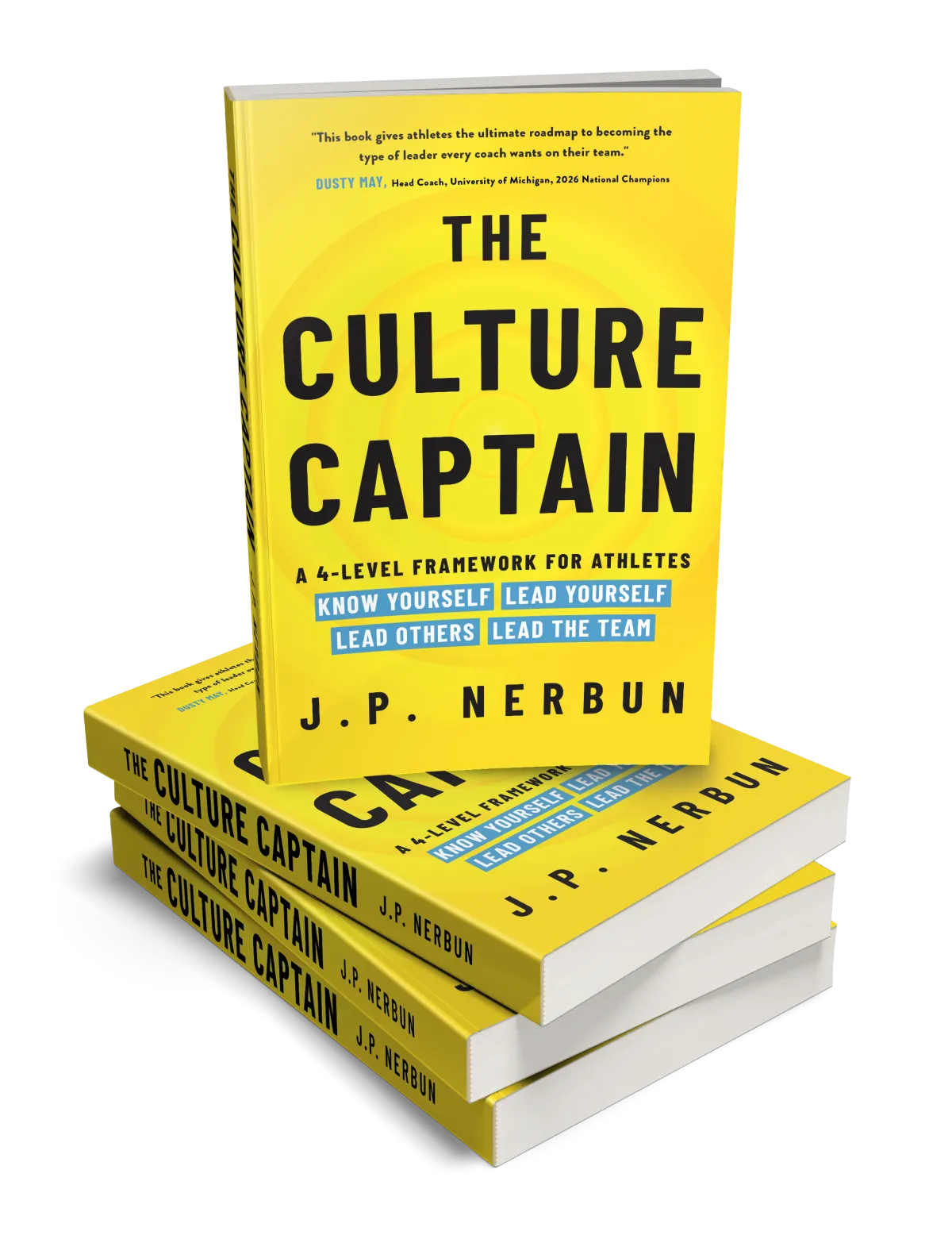
P.S. *Want a practical playbook to help your team take personal accountability and accountability for each other? My new book, The Culture Captain, is available now on Amazon. Grab your copy today to start building self-driven, empathetic leaders on your team.


