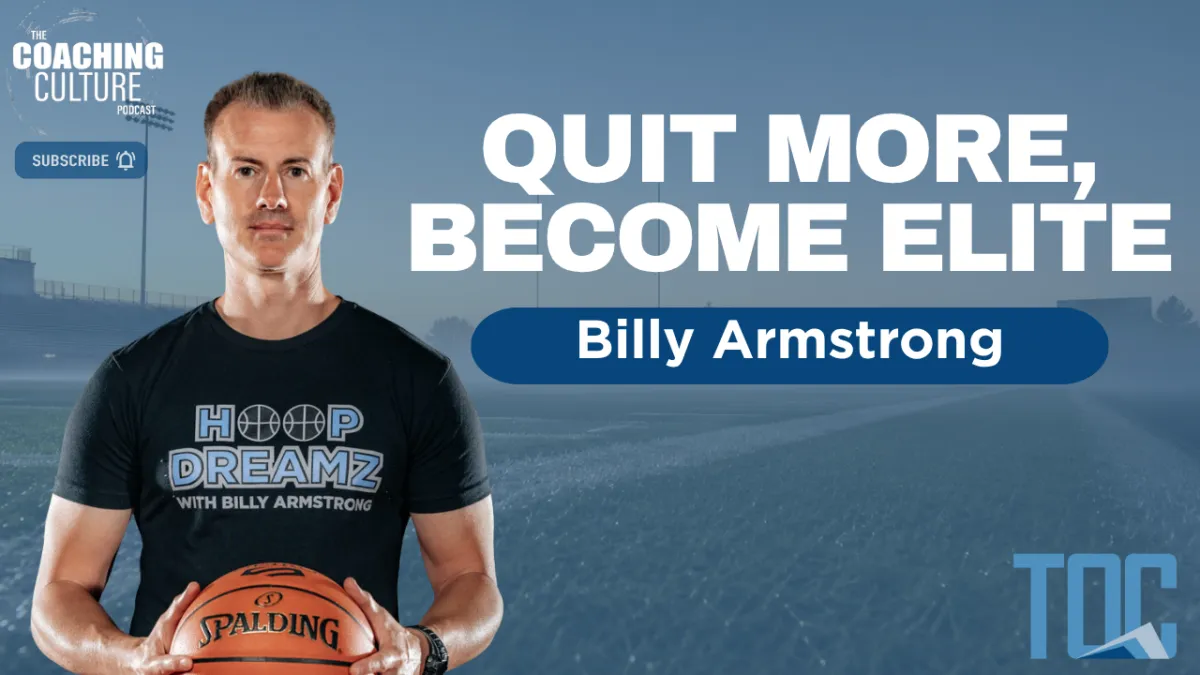
Episode 473: Quit More, Become Elite | Billy Armstrong | Part 2
Episode 473: Quit More, Become Elite | Billy Armstrong | Part 2
Podcast available on: iTunes | Spotify | YouTube
Billy Armstrong wants every player he coaches to chase one truly impossible goal. In part two of this conversation, three years after his first appearance on the podcast, the Bergen Catholic head coach digs into the goal-setting philosophy behind his program's vision.
Every fall, coaches set goals for their teams the same way they did last year: realistic, measurable, safe. Billy Armstrong does the opposite.
In part two of this conversation, Billy explains why he pushes players toward impossible goals instead of achievable ones, why he makes every player build a quit list before setting any goal, and why he believes becoming elite at anything requires doing fewer things, not more. He also opens up about getting brutally honest with himself to finally have the hard conversations he used to avoid, and the backpack exercise he uses to help his players set down a season's pressure before it even starts.
If you missed part one, start there for the personal transformation behind all of this.
TOC 3-2-1
3 QUOTES WORTH WRITING DOWN
"Bigger goals create bigger people."
— Billy Armstrong
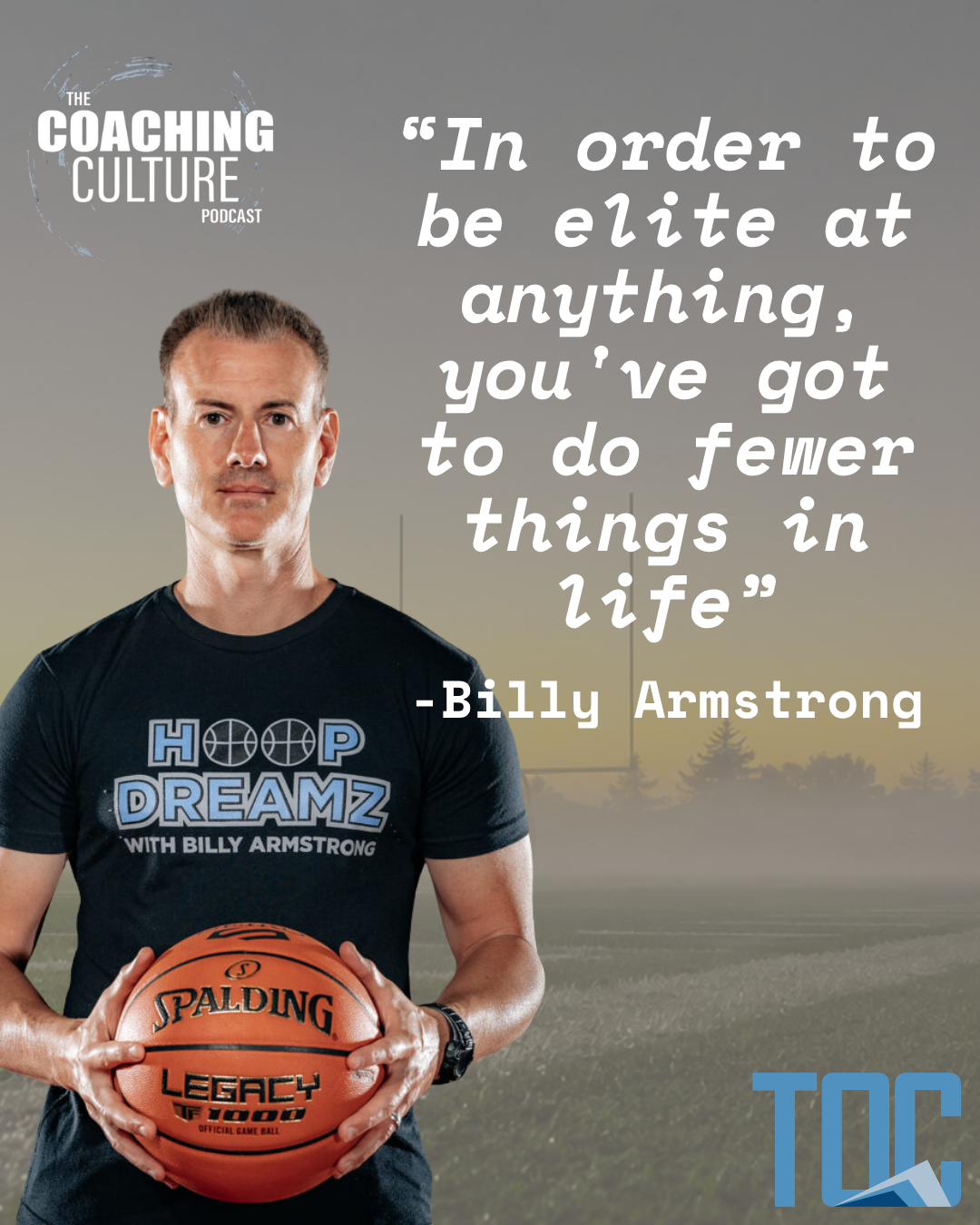
"In order to be elite at anything, you've got to do fewer things in life."
— Billy Armstrong
"You can't coach mad. Everybody you coach is somebody's pride and joy."
— Billy Armstrong
2 QUESTIONS FOR YOUR TEAM
Q1: What is your one impossible goal, and who do you need to become to get closer to it?
Q2: What's one thing on your quit list that would buy you back the most time and energy this week?
1 RESOURCE TO GO DEEPER
Billy shares this kind of thinking daily, from goal-setting exercises to quit lists to Hoop Dreamz coaching philosophy, on Instagram, and goes deeper twice a week in his Hoop Dreamz newsletter.
Instagram: instagram.com/coachbillyarmstrong | Newsletter: hoopdreamz.org/newsletter-signup
KEY TAKEAWAYS
Everyone Needs One Impossible Goal. Billy has his players write down one deliberately impossible goal, not a stretch goal but something wildly out of reach, built around the idea that bigger goals create bigger people. When one player's first goal, state Player of the Year, turned out to be realistic, Billy pushed him toward something bigger, because the size of the goal, not its likelihood, is what shapes the person chasing it.
Ask Who, Not Why. Billy replaced why is this happening to me with who do I need to become, a shift he first made during a difficult period in his personal life and later built into his team's goal-setting process. Every player pairs their impossible goal with two process goals, concrete daily behaviors like not hitting snooze or planning the next day the night before, so the goal has something to actually act on.
The Quit List Comes Before the Goal List. Before his players set any goal, Billy has them build a quit list: bingeing, boozing, snoozing, scrolling, complaining, whining, gossiping. He applies the same standard to himself, describing how quitting his own habit of watching Steph Curry games until one in the morning freed up the time and energy he now spends on fitness, family, and coaching.
Elite Means Doing Fewer Things, Not More. Billy tells players chasing every skill they see on social media, dribbling like one star, shooting like another, that they need to quit most of it. In his experience, becoming elite at anything requires narrowing down to the one or two things that actually get a player on the floor, not accumulating a highlight reel of skills.
Brutal Self-Honesty Ended the Avoidance. Billy used to rationalize away hard conversations with players, telling himself he was giving grace when he was really avoiding confrontation out of fear. Getting brutally honest with himself about that fear, combined with a five-second rule to act immediately instead of dreading a conversation for days, changed how quickly he now addresses issues, sometimes within the hour instead of weeks later.
Put the Backpack Down. To kick off a season carrying heavy three-peat and four-peat expectations, Billy has his players physically wear weighted backpacks through a drill, then take them off, a visual for the pressure they don't need to carry. He ties the exercise to his own realization that avoided conversations work the same way: a weight you keep carrying until you finally set it down.
ACTION ITEMS FOR LEADERS AND COACHES
WRITE YOUR IMPOSSIBLE GOAL
Write down one goal that feels genuinely impossible, not realistic, and pair it with two process goals you can act on tomorrow morning.
BUILD YOUR QUIT LIST
Identify one habit- bingeing, scrolling, snoozing, complaining- that's draining time or energy you could redirect to what matters most, and quit it this week.
USE THE FIVE SECOND RULE
The next time you catch yourself avoiding a hard conversation, count down from five and start it before you talk yourself out of it.
RUN YOUR SELF-TALK THROUGH THE FILTER
Next time you're dreading a conversation, ask three questions: is it true, is it kind, is it helpful, before you decide not to have it.
This is part two of a two-part conversation. Catch part one, on Billy's personal transformation and the shift to coaching shoulder to shoulder here.
Get notes and tools at tocculture.com | Join TOC Coach — community, courses, and live coaching | Better Coaches. Better Leaders. Better Culture.
