One Word Culture
In 2017, UMass men’s hockey won just 5 games. They ranked 56th out of 60 Division I teams: dead last in their conference, virtually no one expected a turnaround from a team with a long history of losing.
Four years later, UMass was holding the NCAA National Championship trophy. It stands as one of the most remarkable program turnarounds in college sports history. A miracle on ice.
So how did head coach Greg Carvel rewrite the identity of a dead-end program in under five years?
In his bestseller The Culture Code, Daniel Coyle observes that culture is not something you are. It is something you do.
Most leaders understand this principle intuitively. They draft team values, establish non-negotiables, and set high standards for daily behavior.
Yet standards alone rarely survive reality.
Adversity hits. Losses accumulate. The grueling grind of a long season sets in. Players get frustrated over playing time, roles, or missed opportunities.
Setting high standards is easy. Maintaining them under pressure is hard.
What separates elite team cultures from the rest is not the standards they establish. It is the shared mindset behind those standards.
Beliefs drive behaviors.
The Power of One Word
Shifting an entire team's mindset sounds complex. In practice, it can be triggered by a single word.
In 2021, the UMass hockey program chose a one-word response for every setback, mistake, and obstacle they faced:
"Good."
Turn the puck over? Good.
Struggling to score on the power play? Good.
Give up an early goal? Good.
The single-word mantra was inspired by retired Navy SEAL commander Jocko Willink, who argued that every setback is simply an opportunity to learn, adapt, and grow stronger.
The 2021 season was defined by constant disruption and uncertainty. UMass used their one-word cultural mindset every step of the way.
The ultimate test came right before the National Semifinal game against perennial powerhouse Minnesota Duluth.
Just hours before puck drop, four key starters: including their primary goaltender and their top goal-scorer: were ruled out due to COVID protocols.
Instead of panicking or making excuses, the reaction inside the UMass locker room was unanimous: Good.
Short-handed and facing the reigning national champions, UMass dug in and scraped out a 3-2 victory in overtime. Two days later, with their starters back, they dominated St. Cloud State 5-0 to claim the first national title in school history.
The specific word UMass chose is not what made them champions.
What mattered was having a clear, universal trigger that instantly reframed adversity for every player on the roster.
When things went wrong, they did not waste emotional energy blaming or complaining.
Standards tell your team how to behave.
Mindset determines how they behave when doing it gets hard or nobody is looking.
— J.P. Nerbun
The Culture Captain
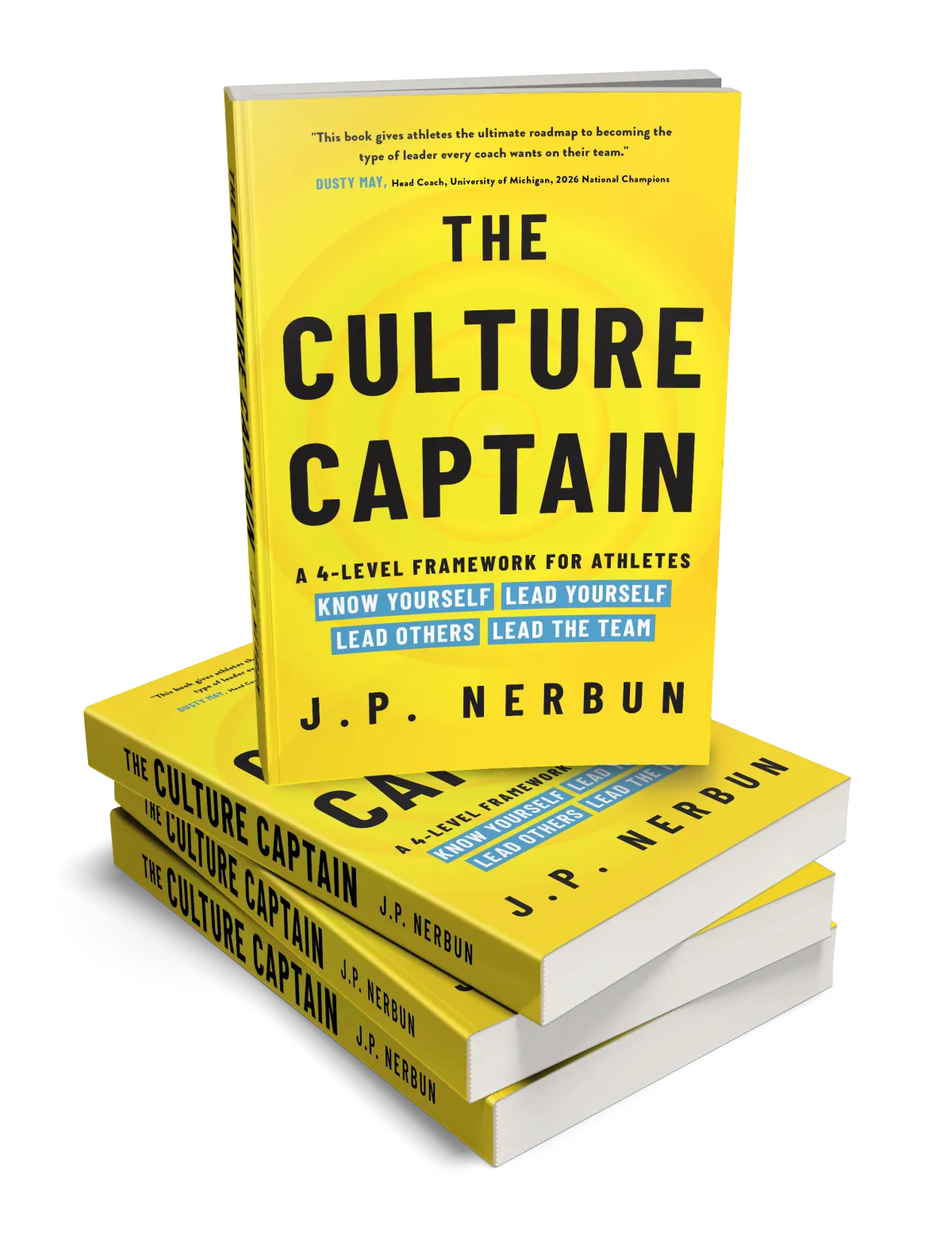
If you want to help your athletes shift their underlying mindset rather than just managing their surface behavior, pick up a copy of The Culture Captain: The 4-Level Framework for Athletes: Know Yourself, Lead Yourself, Lead Others, and Lead the Team.


