
Episode 475: Guru or Guide? Letting Go of Having All the Answers
Episode 475: Guru or Guide? Letting Go of Having All the Answers
Podcast available on: iTunes | Spotify | YouTube
Most of us got into coaching because we were good at the sport we now teach. But that early advantage only goes so far. Sooner or later, every coach faces the gap between what worked for us as players and what our athletes need from us. Bridging it is one of the hardest parts of the job.
This episode gets right to that challenge. JP sits down with John Mayer, head coach of LMU beach volleyball, to talk about when his winning program stopped feeling like enough. John shares the research that led him to move beyond being the coach with all the answers and start giving players real problems to solve.
If your practices are producing solid technique but not independent players, this episode is worth a listen.
TOC 3-2-1
3 QUOTES WORTH WRITING DOWN
"I flipped from before I was the provider of solutions, and then I became the provider of problems."
— John Mayer
"It feels really good to feel like a guru as a coach, to have all the answers. I think it's a little bit of an illusion."
— John Mayer
"These are the sort of people I want to put into the world, not people who follow orders."
— John Mayer
2 QUESTIONS FOR YOUR TEAM
Q1: Where in your practice plan are you handing players 'feel good' reps to protect confidence, and where are you building in the real struggle that actually produces learning?
Q2: The next time you're unsure of the right call in front of your team, will they see you learn out loud, or will you cover it up?
1 RESOURCE TO GO DEEPER
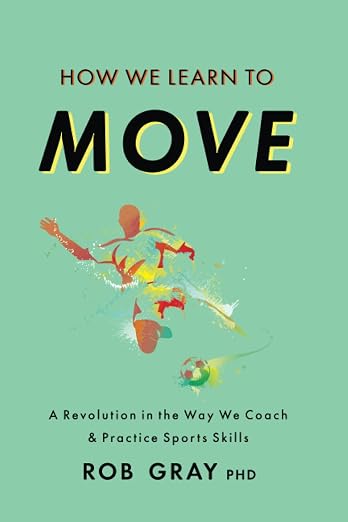
How We Learn to Move by Rob Gray
Based on Wolfgang Schollhorn's work on Differential Learning, Rob Gray applies the research John references throughout the episode in this great read. Instead of correcting players toward one 'right' movement, athletes perform a skill with constant variation so their bodies discover their own stable solutions.
KEY TAKEAWAYS
Great players don't automatically make great coaches. John played at an elite level before coaching, but the transition demanded something different: empathy for athletes whose bodies and situations don't mirror his own, and the humility to see that what worked for him as a player won't work for everyone he coaches.
Design for the sweet spot between success and failure. Skill development lives at the edge of a player's current ability, not in drills that are already mastered or drills that are so hard players are only flailing. John looks for the appropriate challenge point for each individual rather than running the same drill for the whole roster.
Differential learning turns off the fear of judgment. Starting practice with unusual, playful variations on a skill, like setting a volleyball after a cartwheel, dims the part of the brain worried about being judged. When players aren't protecting their image, they're far more open to actually learning.
A coaching crisis can be the doorway to real growth. John's shift didn't come from a losing season. It came right after his first conference championship, when a friend introduced him to research he initially dismissed. Slowing down during COVID gave him the space to sit with the discomfort of maybe being wrong.
Being the provider of problems beats being the provider of solutions. Handing players problems to solve instead of answers to execute produced players who were just as skilled technically, but more independent, more creative, and far less dependent on John for every decision under pressure.
Feedback should flow in both directions. John built a weekly whiteboard practice where players tell coaches what's working, what's confusing, and what to improve. It was uncomfortable at first, but normalizing that feedback loop is what let the new approach actually take hold.
ACTION ITEMS FOR LEADERS AND COACHES
AUDIT YOUR FEEDBACK LOOP
This week, ask your team one direct question about your own coaching, anonymously if needed, and actually read the answers before you react.
ADD ONE NOISE DRILL
Pick a core skill and run it with an unexpected constraint, like the opposite hand or an off-balance start, at the top of one practice this week.
NAME YOUR CHALLENGE POINT
For one drill this week, decide honestly whether it's too easy, too hard, or right in the learning zone for your team, and adjust it on the spot.
SAY 'I DON'T KNOW' OUT LOUD
The next time you're genuinely unsure in front of your team, name it directly instead of covering, and let them watch you work through it.
Get notes and tools at tocculture.com | Join TOC Coach — community, courses, and live coaching | Better Coaches. Better Leaders. Better Culture.
