No More Bad Practices: Establish a Standard of Excellence
Every coach knows the feeling. Within the first five minutes of practice, you realize it is not going to be a great practice.
No matter how much you encourage, urge, or yell, the energy remains flat. Focus is non-existent. By the end of the session, you question whether anyone improved at all, and you feel like you just wasted time.
In those moments, it is easy to blame the players. But team culture follows a simple set of rules:
You get what you tolerate.
What you permit, you promote.
Ignoring behaviors lowers the standard.
In the first five minutes of practice, the coach sets the tone. So how do you guarantee a high standard before the real session even starts?
You use the Quick-Set.
The Quick-Set is a warm-up routine executed before every practice and game. While it is designed to take just a few minutes, it takes as long as necessary when behavior falls short.
Here is how to build and execute a Quick-Set with your team.
Step 1: Select 3 to 5 Simple Drills
Choose simple, low-complexity drills your team already knows intimately. The goal is not tactical instruction: the goal is behavioral alignment.
College Basketball Example (60 seconds per drill):
4-Corner Passing
2-Line Finishes
3-Man Full-Court Layups
2v1 Pitch or Finish
Zero Shooting with Partner
Volleyball Example (60 seconds to 2 minutes per drill):
2-Touch Platform Free-Ball Control
3v3 Short-Court Passing and Calling
Server to Target Precision Passing
Step 2: Establish "Success Criteria" (Define Excellence)
Before you start the drill, huddle the team and ask a single question: "What does excellence look like in this drill?"
Do not let them give vague answers like "working hard" or "getting better." Coach them to identify specific, observable behavioral standards.
If you are running a 3v3 passing drill on the net, the criteria might be:
Call out every contact you see (calling ball, set, and hit on every single touch).
Move your feet before the ball crosses the net.
Sprint to transition on every attack.
If a player says, "We're going to sprint and communicate," ask them to prove it: "Show me what a real sprint looks like." Let them demonstrate it. Now the standard is clear to everyone.
Rule: Never set outcome-based standards like making every set or landing every hit. Focus 100% on behaviors that are unarguably within their control.
Step 3: Set the Expectation and the Timer
Tell your team: "We are doing this drill for one minute of excellence. Every single one of you is capable of calling the ball and sprinting."
Explain that coaches will watch silently. If even one player drops below the standard: by staying silent on a contact or failing to transition: the coach will say one word: "Reset."
The timer resets to zero.
Step 4: The Secret to Holding Them Accountable
When a drill keeps resetting, many coaches fall into a common trap: they give "final warnings" or punish players with physical conditioning like running.
Lectures and conditioning waste precious time you need for work. Worse, warnings dilute your standard.
If you hit three resets in a row, blow the whistle and bring them in. Ask two questions:
"Why did I call a reset?" (They will admit someone stayed silent.)
"When you saw your teammate miss the call, what did you do?"
When they admit they said nothing, give them their real job: Call them up, remind them, and support them.
Tell the team plainly: "We are not moving on to the rest of practice until we complete this drill to standard. We are doing this drill until we get it right."
Step 5: Handle Individual Outliers vs. Collective Slippage
If the entire group is floating and unengaged, keep resetting the team until peer pressure kicks in and they lock in together.
However, if eleven players are meeting the standard and one individual consistently refuses to call out contacts or effort, do not hold the whole gym hostage: step that individual off the court.
Let the rest of the team finish their minute of excellence, then address the individual player separately.
Step 6: Decentralize Command and Hand Over the Whistle
The ultimate goal of the Quick-Set is to transition your program from coach-led to player-led.
Once your team understands the process:
Empower your captains. Instruct them to call resets on their own teammates when standards slip.
Step back. Walk into the gym four minutes into practice and watch your team running their own Quick-Set with energy through the roof.
Raise the bar. Once 3v3 passing becomes second nature, ask: "If we were watching the Texas Longhorns run this drill, what would excellence look like?" Add a new behavioral standard and keep building.
Why the Quick-Set Transforms Programs
It eliminates wasted sessions. You never spend hours dragging a low-energy team through practice.
It eliminates pre-game lethargy. Translating the Quick-Set to pre-game warm-ups ensures your team steps onto the court locked in from the first serve.
It builds peer-to-peer accountability. Players tire of restarting drills and start coaching each other so the team can move forward.
It develops authentic leaders. Players learn how to hold high standards without relying on the head coach.
Standards set the floor for your program. The Quick-Set ensures your team never falls beneath it.
— J.P. Nerbun
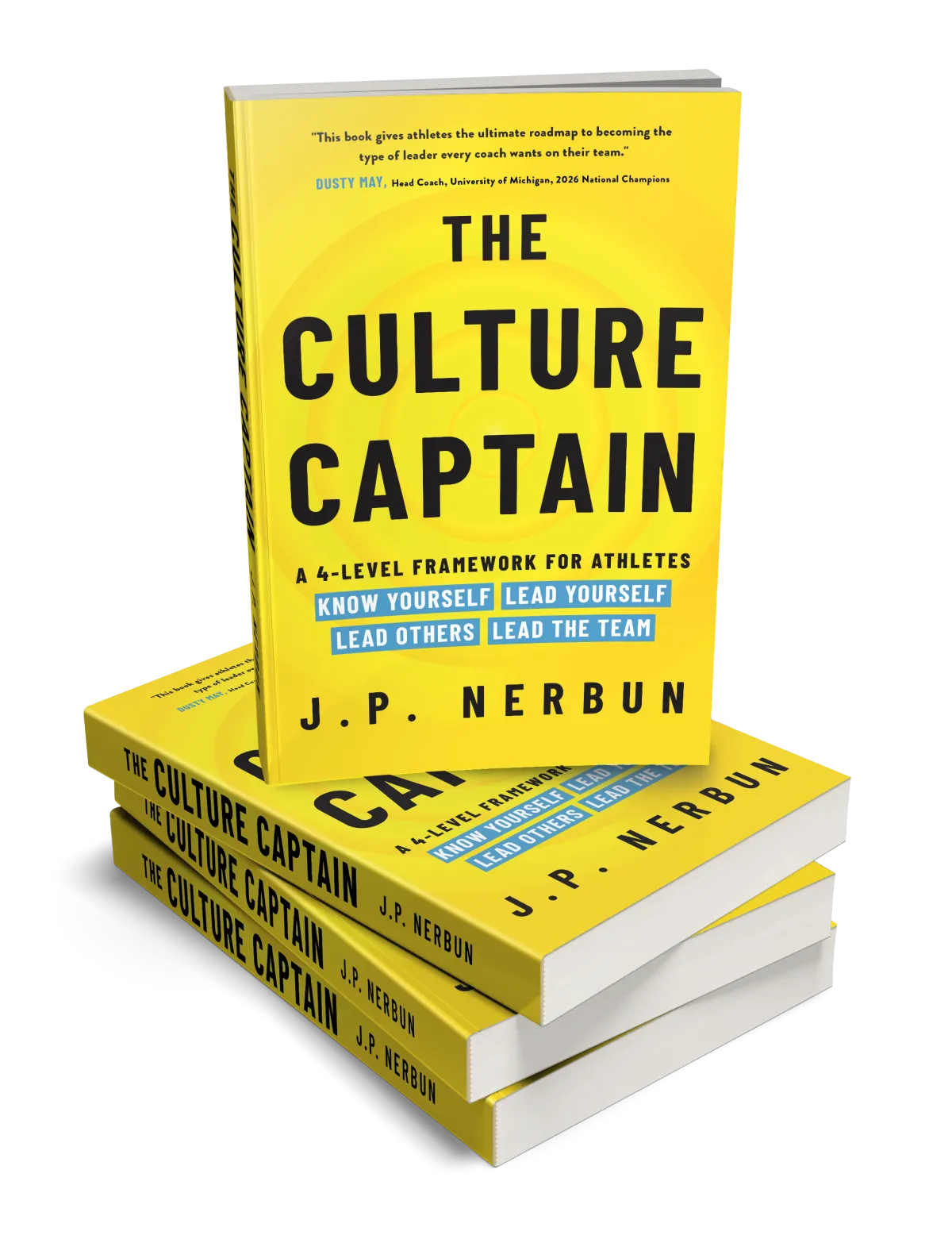
The Culture Captain
If you want to help your athletes and yourself build deep self-awareness, pick up a copy of The Culture Captain: The 4-Level Framework for Athletes to Know Yourself, Lead Yourself, Lead Others, and Lead the Team.


