
A Chip Off the Shoulder
In 2021, just weeks before the NFL Draft, Sports Illustrated published a profile on Trevor Lawrence: the top NFL quarterback prospect of his generation.
The article revealed a young athlete who was grounded, mentally secure, and remarkably comfortable in who he was as a person.
Naturally, the sports media seized on a few lines from the interview:
"It’s not like I need this for my life to be okay... I don’t have this huge chip on my shoulder, that everyone’s out to get me and I’m trying to prove everybody wrong. I just don’t have that. I can’t manufacture that. I don’t want to."
The reaction from sports pundits was critical. Old-school NFL analysts and scouts questioned whether Lawrence lacked the "killer instinct," fear, and obsession required to make it in professional football.
How could a young man guaranteed tens of millions of dollars stay motivated if football wasn't his sole purpose for living?
The Myth of Toxic Obsession
Fast forward to the start of the 2026 NFL season. Lawrence is coming off a 13-win campaign, leading Jacksonville to a hot 4-1 start, and playing some of the most efficient, poised football of his career.
Contrary to what the critics predicted, Lawrence is deeply committed to his craft. He loves football. He loves the process of getting better. He views mistakes as opportunities to learn, and he plays the long game.
He is obsessed with excellence. He just isn't toxically obsessed.
For decades, sports culture has glorified fear-based motivation:
The chip on the shoulder
The desperate need to prove doubters wrong
An identity entirely dependent on winning and losing
That toxic obsession produced icons like Michael Jordan. But while fear and insecurity can generate world-class performance, they often leave athletes unfulfilled and broken at the end of the day.
A Better Way to Lead
The line between healthy drive and toxic obsession is often razor-thin.
A healthy drive isn't something an athlete is born with. It is cultivated over time by parents, coaches, and the environment around them.
So, were the critics right?
Maybe Trevor Lawrence could squeeze out more production if he played angry, held grudges, and wrapped his worth into his passer rating.
Even if that were true, the real question we must ask is: Would it be worth it?
True high performance isn't built on fear. It is built on deep self-knowledge, genuine passion, and the freedom to play without needing the outcome to validate yourself.
— J.P. Nerbun
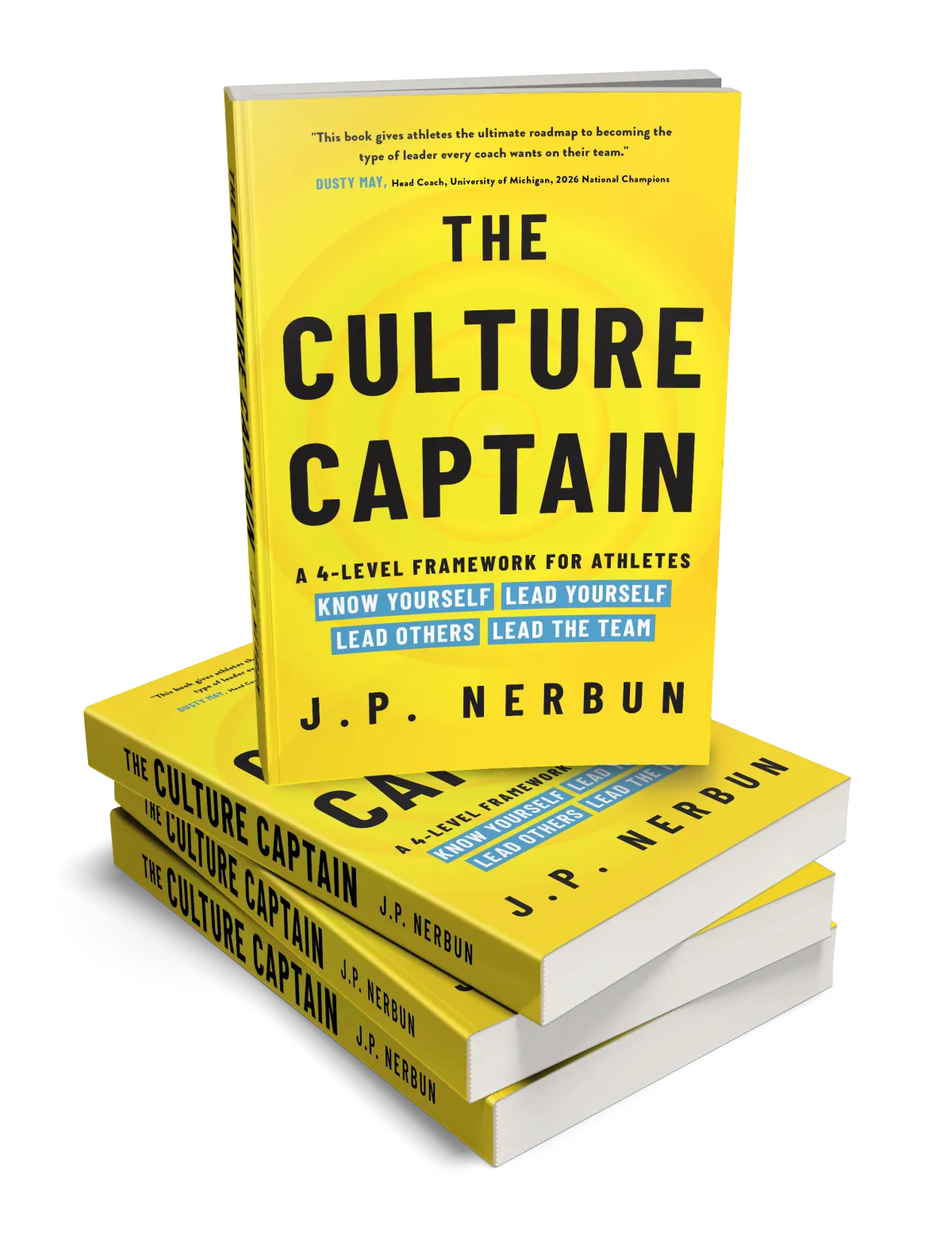
The Culture Captain
If you want to help your athletes transition from unhealthy obsession to sustainable, high-level performance, pick up a copy of The Culture Captain: The 4-Level Framework for Athletes Know Yourself, Lead Yourself, Lead Others, and Lead the Team.


