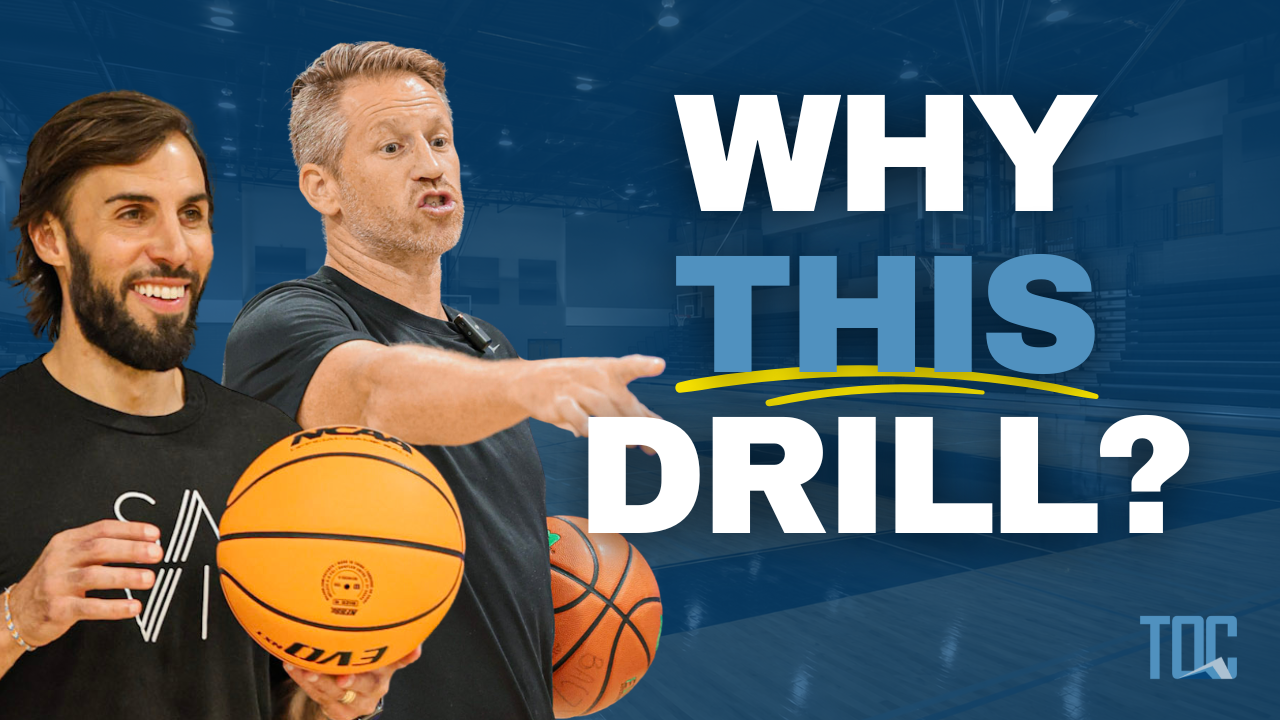
How to Run a More Effective Practice | Ep 482 | SAVI Basketball (Part 1)
Podcast accessible on: iTunes | Spotify | YouTube | tocculture.com
Players buy in when they trust that their coach can help them get better. In part one of JP's conversation with Tyler Coston and Mark Cascio of SAVI Basketball, they break down what separates a busy practice from an effective one, and how head coaches can bring their assistants along.
TOC 3-2-1
3 QUOTES WORTH WRITING DOWN
"I would encourage coaches to be more prepared than planned." Mark Cascio
"As a coach, if you believe that the drill looking good is success, then you're gonna coach according to that belief." Tyler Coston
"I think good coaches don't coach everything, they coach the main thing." Mark Cascio
2 QUESTIONS FOR YOUR TEAM
Q1: For every segment of our next practice, can we name the objective it serves, and what would we cut if it doesn't serve one?
Q2: During a drill, does every coach on our staff know exactly what they are watching for, or are we asking them to fix what they can't see yet?
1 RESOURCE TO GO DEEPER
SAVI Basketball by Tyler Coston and Mark Cascio A community, practice breakdowns, and training for basketball coaches who want to plan and run better practices. JP's link to join is in the episode details. skool.com/savicoaching
KEY TAKEAWAYS
1. Plan around what you're working on, not which drills you run. Mark's rule for practice planning is to start with what you're working on, then choose the activities. When Tyler watched a Coach K practice at Duke, the plan had three objectives and four progressions. Most less experienced coaches have more drills and no clear objectives, so ask of every segment: why are we doing this?
2. Messy is okay. Unorganized is not. The worst practices Tyler and Mark see are fear-based and coach-driven, with players yelled at for things they were never taught. Mark loves a messy practice but says an unorganized one is a killer: no clock, no score, and time wasted sorting out teams. A relational coach can fall into the same trap without a plan.
3. Coach for progress, not perfection. Results-focused coaches try to coach everything and get frustrated by the gap between where the team is and where they want it to be. Good coaches coach the main thing and look for the gain. Tyler encourages coaches to see results and process as a spectrum and choose which way to move.
4. Be more prepared than planned. A minute-by-minute plan leaves no room to teach. Mark's advice is to round up: if a segment should take eight minutes, give it 10. JP adds that being prepared means being ready to sense and respond to what the team needs and where the energy is in the room.
5. Develop your assistants' lens. Tyler uses the FedEx logo to make the point: once someone shows you the arrow, you can't unsee it. Most assistants have a less developed lens than the head coach, so give them ownership of a segment, tell them what to look for, and mentor them through it instead of making them mini versions of you.
6. Crockpot it. Don't microwave it. In the SAVI method, victory means embracing the long, slow process of learning, not winning the drill. When a game isn't producing the objective, the "game sandwich" Mark learned from Tyler lets you stop, drill the skill, and go back to the game. And common sense still applies: if you play tomorrow, run what your team needs today.
ACTION ITEMS
WRITE THREE OBJECTIVES Put three objectives at the top of your next practice plan and cut any drill that doesn't serve one of them.
ROUND UP YOUR TIME Add a few minutes to every segment of this week's plan so you have room to stop, teach, or stay with something that's working.
GIVE AN ASSISTANT A SEGMENT Hand one coach a game or drill to run, tell them the one thing to watch for, and give them feedback after practice.
TRY A GAME SANDWICH When a game isn't producing what you want, stop, run a short drill on that skill, then go back to the game to see if it carries over.
Get notes and tools for every episode at tocculture.com
Join TOC Coach: community, courses, and live coaching for coaches who want to go deeper.
Better Coaches. Better Leaders. Better Culture.
