The Most Important Thing Every Head Coach Needs to Do | Patrick Lencioni | Episode 479
Episode 479: The Most Important Thing Every Head Coach Needs to Do | Patrick Lencioni
Podcast available on: iTunes | Spotify | YouTube
This month we hosted our Monthly Mastery workshop, helping coaches answer this question we frequently hear members ask: How do I get my players to hold each other accountable? It is a fair question, and most of us go looking for the answer in team meetings, captain programs, or a new drill.
In this first of two conversations, Patrick Lencioni points somewhere else. He talks about running a family with intention, drafting kids for character, and owning mistakes, and then he gets to the idea he came to share: the most important team a head coach leads is the coaching staff.
If your staff is polite but not really a team, this episode will show you why your players notice, and where to start fixing it.
TOC 3-2-1
3 QUOTES WORTH WRITING DOWN
"The most important job of teamwork for any coach, pretty much in any sport, is building a team of coaches."
— Patrick Lencioni
"If my clients ran their companies the way we run our family, they'd all go out of business."
— Patrick Lencioni
"Sins of omission is when you see other people do things wrong and you don't do anything about it."
— Patrick Lencioni
2 QUESTIONS FOR YOUR TEAM
Q1: If we could only be great at two or three things this season, what would they be, and what would we say no to because of them?
Q2: Where have we seen something go wrong on this team and said nothing, and what would it look like to address it this week?
1 RESOURCE TO GO DEEPER
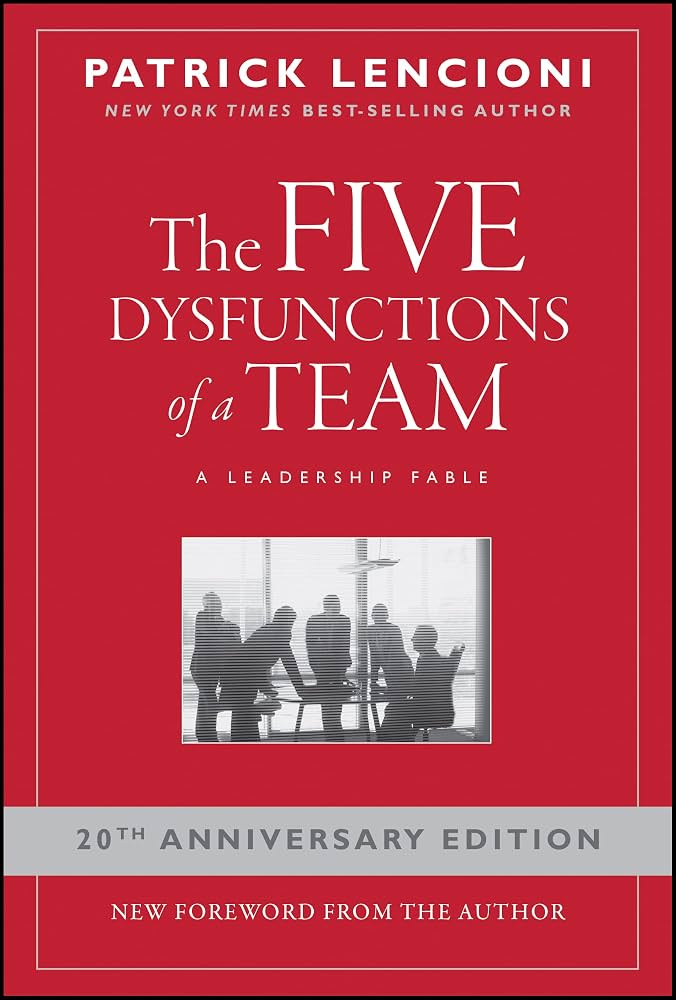
The Five Dysfunctions of a Team by Patrick Lencioni
Pat's model of trust, conflict, commitment, accountability, and results is the framework Erik Spoelstra has used with the Miami Heat staff for years. Run it on your coaching staff before you ask your players to live it.
KEY TAKEAWAYS
Your coaching staff is your first team. Pat has worked with professional and college teams, and his biggest point is that whether the coaches function as a team says more to the players about how to be a team than anything else. If your staff can't be vulnerable, engage in good conflict, commit to decisions, and hold each other accountable, your players won't either. Erik Spoelstra once called Pat to help him rebuild his relationship with one of his assistants because he knew the team could not come together if the two of them were not on the same page.
Players copy what they see at the top. When executives tell Pat they have a middle management problem, he asks who those managers report to, and it always comes back to the people in the room. Sins of omission, seeing something go wrong and doing nothing about it, are what players notice most. You can't ask your quarterback to hold the offensive line accountable if you won't hold your offensive coordinator accountable. On a staff, there is no they.
Get clear on the simple things. Pat and his wife realized they ran their home far less intentionally than his clients ran their companies, so they sat down over dinner and named their family values: creativity, standing up for what's right, and forgiveness. They also named a strategy, including staying heavily involved in their kids' lives, which made it easy to turn down speaking trips that conflicted with coaching soccer. That work became his book, The Three Big Questions for a Frantic Family.
Draft for character and coach culture first. Pat coached all four of his sons and ran those teams the way he runs a company, with culture first. While other coaches at tryouts took notes on left feet, he asked kids if they liked school and about their parents to see if they were coachable, kind, and hardworking. Like his own dad, he told players he did not mind if they failed, as long as they cared and tried their hardest.
Pick a few things and stake your season on them. Auburn baseball coach Butch Thompson commits his teams to a short list, including that no one will run to first base harder than they will. Pat sees CEOs do the opposite, promising to be great at everything, which usually means nothing gets enough time and effort. Choose the few things your players will be great at and build the foundation from there.
Owning the mistake earns respect. Pat described an NFL head coach who took full responsibility after his quarterback forgot there were no timeouts left and let the clock run out, even though the player had made the error. Vulnerability looks different at the podium than inside your staff room, and it varies by sport and level. But a leader who says, "That's on me," and admits everyone struggles gives the people around them permission to do the same.
ACTION ITEMS FOR LEADERS AND COACHES
RATE YOUR STAFF
Ask your coaches to score your staff from 1 to 5 on trust, healthy conflict, commitment, and accountability, then talk through the lowest score together.
HAVE THE CONVERSATION
Pick one issue with an assistant you have been putting off and talk with them one-on-one before your next practice.
NAME YOUR FEW THINGS
Choose two or three behaviors your team will be the best at this season and explain to your players why they matter.
DEFINE HOME VALUES
Sit down over dinner with your family this week and name two or three values you want to live out at home.
Get notes and tools at tocculture.com | Join TOC Coach — community, courses, and live coaching | Better Coaches. Better Leaders. Better Culture.
