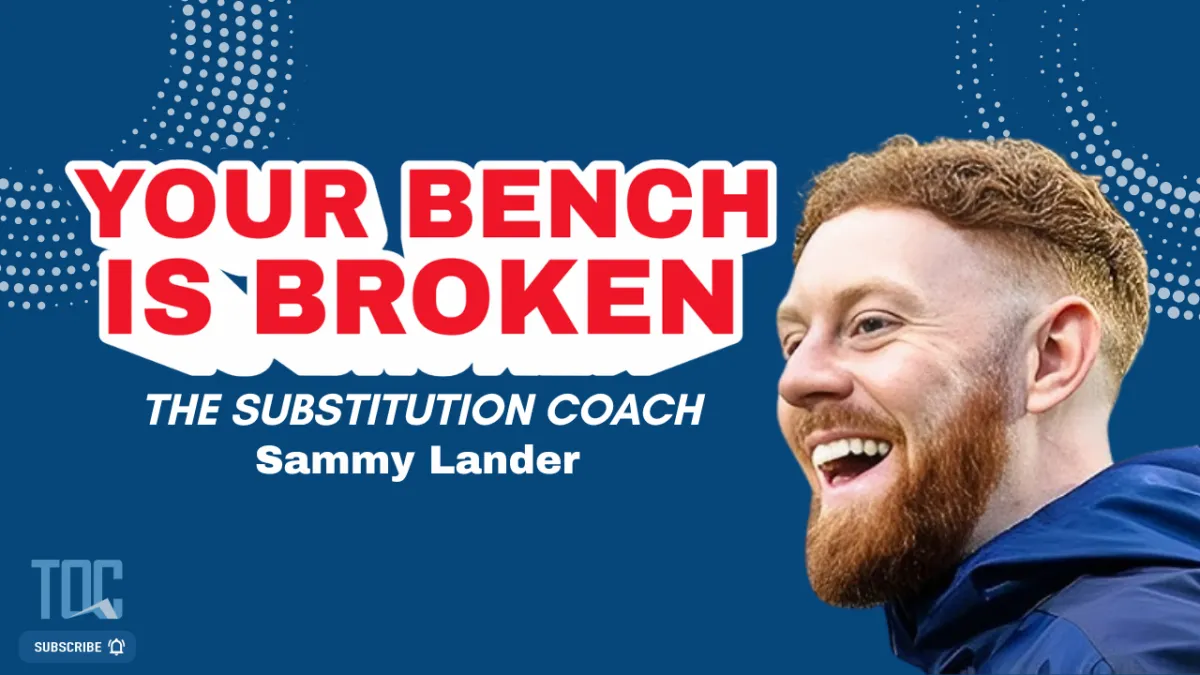
How to Coach Subs and Reserves for High Performance | EP 443 | Sammy Lander Part 1
Podcast accessible on: iTunes | Spotify | YouTube
In this episode, Sammy Lander joins The Coaching Culture Podcast to explore one of sport’s most overlooked challenges: preparing and empowering substitute athletes. Sammy unpacks the psychological journey a non-starter endures, the critical difference between belonging and mattering, and how coaches can transform the bench from a passive waiting area into an active, purposeful role.
Sammy shares real-world examples from his work with professional football clubs, offering coaches practical tools, better language, and a new cultural lens for thinking about their entire squad, not just the starting eleven. The conversation also touches on substitution strategy, return on investment for organizations, and what a truly great sideline looks like.
Key Takeaways
Mattering vs. Belonging: Athletes don’t just want to belong to a team — they want to matter. For non-starters, playing time is the primary lens through which they gauge their importance. Coaches must find ways beyond minutes on the field to make athletes feel genuinely valued and purposeful within the group.
Give Substitutes a Process: The biggest gap for bench players isn’t playing time — it’s the absence of a clear process. Without a methodology and a sense of preparation, substitutes experience a jarring emotional whiplash, going from feeling disconnected and left out to suddenly being asked to perform in front of thousands of people. A defined process bridges that gap.
Frame the Substitute Role Powerfully: The language and framing coaches use around the substitute role matters enormously. Vague clichés like “go win us the game” set players up to fail. Equally damaging is making the bench sound like a comfortable rest stop. Coaches should communicate with specificity and energy about what the substitute’s exact contribution should be.
Clarity from Day One: Basketball, Sammy observes, does this better than football: many teams sign players with a role already defined and sell that role to them from the start. When athletes join knowing their expected minutes and what their path to more looks like, they come in with clarity rather than unmet expectations.
Substitutes Reveal Your Culture: The bench is the most honest reflection of an organization’s culture. If you want to understand the health of your team, ask the player who plays the least. What substitutes say about their experience — whether they feel included, valued, and equipped — tells you everything about the environment coaches have built.
The Substitution Union: One of Sammy’s most innovative ideas is building a “Substitution Union” — a defined identity and value system for the bench that players themselves help create. At one club, bench players agreed on three values: positive, proactive, and prepared. Photos were taken of the bench during games and used as reflection and accountability tools.
Impactful Quotes
“If you want to understand a company’s culture, go and ask the intern. What do your substitutes say about you? What do your substitutes say about the culture?” — Sammy Lander
Action Items for Leaders
Build and communicate a development pathway. Pair the honest conversation with a clear roadmap: what does the player need to improve, what support will they receive, and what is the target outcome or timeline?
Audit your language around the bench. Review what you say to substitutes before and during games. Replace vague phrases like “go win us the game” with specific, role-tailored instructions about what you need from that player in that moment.
Create a Substitution Union. Invite your bench players to collaboratively define values that represent how they want to show up. Make those values visible and hold the group accountable to them through reflection and dialogue.
Photograph your bench and use it as a coaching tool. Take pictures of your sideline during games and use them in team meetings to prompt discussion: What does this look like? What message does it send to fans, opponents, and teammates?
Give non-starters a leadership role. Look for meaningful ways — like leading part of a halftime session, mentoring younger players, or owning a specific team practice — where a bench player can contribute and feel that they matter, even without extra playing time.
📖 Grab Sammy's book, Finishers:
https://www.amazon.com/Finishers-Sammy-Lander/dp/1917380062
🤝 Join our free coaching community — Better Coaches, Better Leaders, Better Culture:
https://www.skool.com/toccoach
📩 Know a coach who needs this? Share the Team Culture Toolbox newsletter with them:


