How Great Teams Survive Pressure
Winston Churchill wasn’t terrified of the Luftwaffe, the Blitz, or a land invasion. He later wrote: "The only thing that ever really frightened me during the war was the U-boat peril."
Submarines were the ultimate weapon of the German navy in World War I and II. But what made a great U-boat wasn't its firepower. It was its ability to dive deep.
Dive deep, and you wouldn’t be detected on sonar. Dive deep, and you go under the mines and depth charges.
The problem was: The deeper you dive, the greater the pressure.
German engineers engineered U-boats to go deeper beyond the official rating they gave a submarine. If a boat was rated for 100 meters, it could actually withstand 200 to 250 meters of crushing water pressure.
So captains never really knew how deep they could go and in battle would routinely test those limits. It wasn’t all down to engineering and the decision making of the captain.
Engineering gave the boat its potential limit. The crew determined its actual limit.
Surviving extreme depth required men shifting weight, pulling pressure valves, manually patching leaks, and using screws to hold buckling steel together.
We see a similar dynamic play out in high-performing teams.
All teams experience pressure:
The pressure of high standards
The pressure of hard work
The pressure of high-stakes outcomes
The pressure of internal conflict
Most leaders assume surviving pressure is about structural engineering: having "tough" individuals. They think resilience comes down to the talent they were dealt or their own decision-making as a head coach.
It doesn't.
Pressure isn't managed solely from the top, nor is it solved by collecting a group of individual tough guys. Pressure is sustained by the team's shared capacity to step up and lead when the hull starts to creak.
When the season gets heavy, a team doesn't survive just because the coach set high standards. They survive because internal leaders step up across the group to actively find the leaks, take ownership, and balance the load together.
— J.P. Nerbun
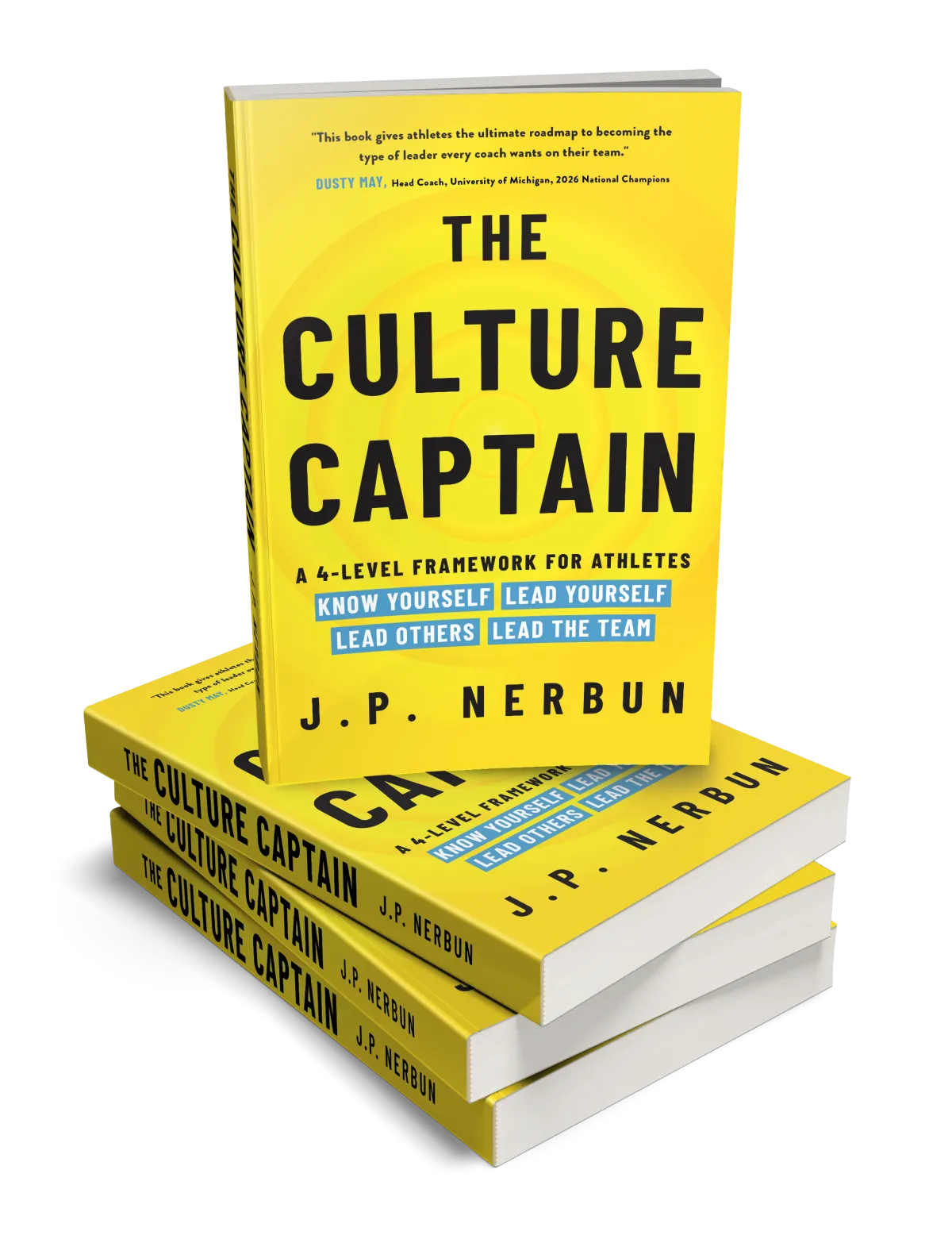
The Culture Captain
If you want to do this work—or guide others through it—grab a copy of my new book, The Culture Captain, and download the companion Field Guide at theculturecaptain.net.


