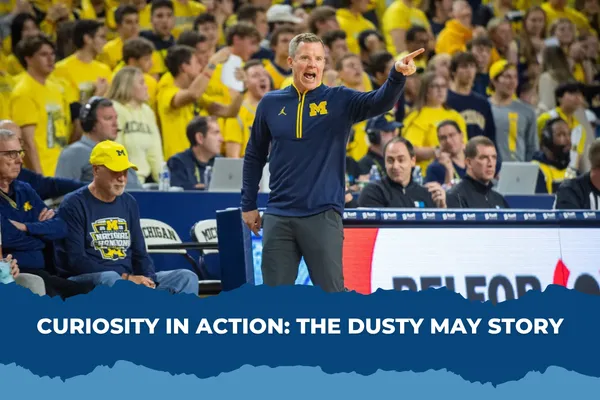
Curiosity in Action: The Dusty May Story
I was recently interviewed by The Athletic for a feature on Michigan Basketball Coach Dusty May. I first met Dusty in 2020; he reached out after hearing me on Chris Oliver’s Podcast, and we began working together as he was turning around the FAU program.
To the outside world, Dusty’s climb looks like a vertical shot to the top. To those who know him, it’s been a difficult journey. His first four years at FAU were hard—he was barely above .500. For a young head coach at a mid-major that had never seen success, it’s tough to trust the process.
But Dusty didn't just want to win; he wanted to be a transformational coach. In the beginning, he had doubts whether that type of coaching could produce results quick enough to keep your job. It often doesn’t feel like the "transformational" coaches are the ones hoisting trophies. Between COVID, the transfer portal, and NIL, the pressure to "sell out" and just do what everyone else is doing is massive.
I’m not sure how much the encouragement of a former average high school coach mattered at the time, but he stayed the course even when he wasn’t sure it would work. In 2023, he became an "overnight success" when FAU made a historic run to the Final Four. But Dusty’s success wasn’t a fluke; he has sustained it.
The secret? The Athletic pointed to his Curiosity. But what does curiosity actually look like in the trenches?
Here are four things Dusty does better than a lot of other coaches.
1. Mentorship
Dusty started as a student manager at Indiana under Bob Knight. He has worked for some of the biggest names in the game. Usually, when a coach finally becomes "The Guy," they isolate themselves. Dusty does the opposite. He maintains deep relationships with other coaches and refuses to stay in a coaching bubble. He is always looking to learn from his peers, regardless of their level.
2. Consultants and Coaches
As the article noted, Dusty works extensively with people outside his immediate circle—like former high school principal Doug Lemov, author of The Coach’s Guide to Teaching, basketball consultant Chris Oliver, or an executive leadership coach like myself. He doesn’t just read our books or listen to podcasts; he wants to have conversations. Curious conversations where he is humble enough to ask for feedback and learn from it.
3. Trading Judgment for Questions
In an era where many college coaches blast their players in the media or vent to their staff behind closed doors, Dusty hits the "pause" button. When frustration arises, he notices the judgment and gets curious instead. He is constantly searching for better questions to help him understand his players’ mindsets and work with them.
4. Both Transactional and Transformational
In her book Leadership in Turbulent Times, Doris Kearns Goodwin writes of Abraham Lincoln: "Pragmatic, transactional strategies provided the nuts and bolts of principled, transformational leadership." Dusty lives this. He has maintained a deeply relational approach to coaching while successfully navigating the highly transactional landscape of modern sports. He has shown us that you don't have to choose between being a good leader and being a winner.
Hear More from Dusty on The Coaching Culture Podcast:


