
Episode 467: How to Get Your Captains Building a Team Everyone Wants to Be On | Culture Captain Level Four
Episode 467: How to Get Your Captains Building a Team Everyone Wants to Be On | Culture Captain Level Four
Podcast accessible on: iTunes | Spotify | YouTube
This week, a member of our TOC Coach community asked how they can build accountability in their program. "One thing I'm working on is creating a stronger team culture where players hold each other accountable instead of relying on coaches to correct everything."
It is one of the most common frustrations we hear, and it is usually not because the leaders are not there. It is because we have not built the conditions for them to show up.
This week's episode gets into exactly that. JP, Betsy, and Nate work through what actually separates a healthy friend group from a clique, why almost no team has a real culture of honest feedback, and Betsy's own story of walking away from a Division I program as team captain.
If you have ever wondered whether your quietest players are actually your strongest leaders, or whether a transfer decision says more about your program than the athlete, this conversation will change how you look at your roster.
TOC 3-2-1
3 QUOTES WORTH WRITING DOWN
"We make it out to be this perseverance: drive hard, sit at the end of the bench, put up with a tough coach, and get through it all. We glorify that to an extent that's probably not healthy."
—J.P. Nerbun
"We're really good at judging on the back end, and we're really bad at counting the cost on the front end."
— Nate Sanderson
"The quitting part was about being a good teammate to myself. That was the first time in my life I can remember putting myself before the team."
—Betsy Butterick
2 QUESTIONS FOR YOUR TEAM
Q1: When was the last time you gave a teammate honest feedback even though it felt uncomfortable? What stopped you the times you didn't?
Q2: If you're in a tight group of friends on this team, are you making sure everyone else always has an open door in, too?
1 RESOURCE TO GO DEEPER
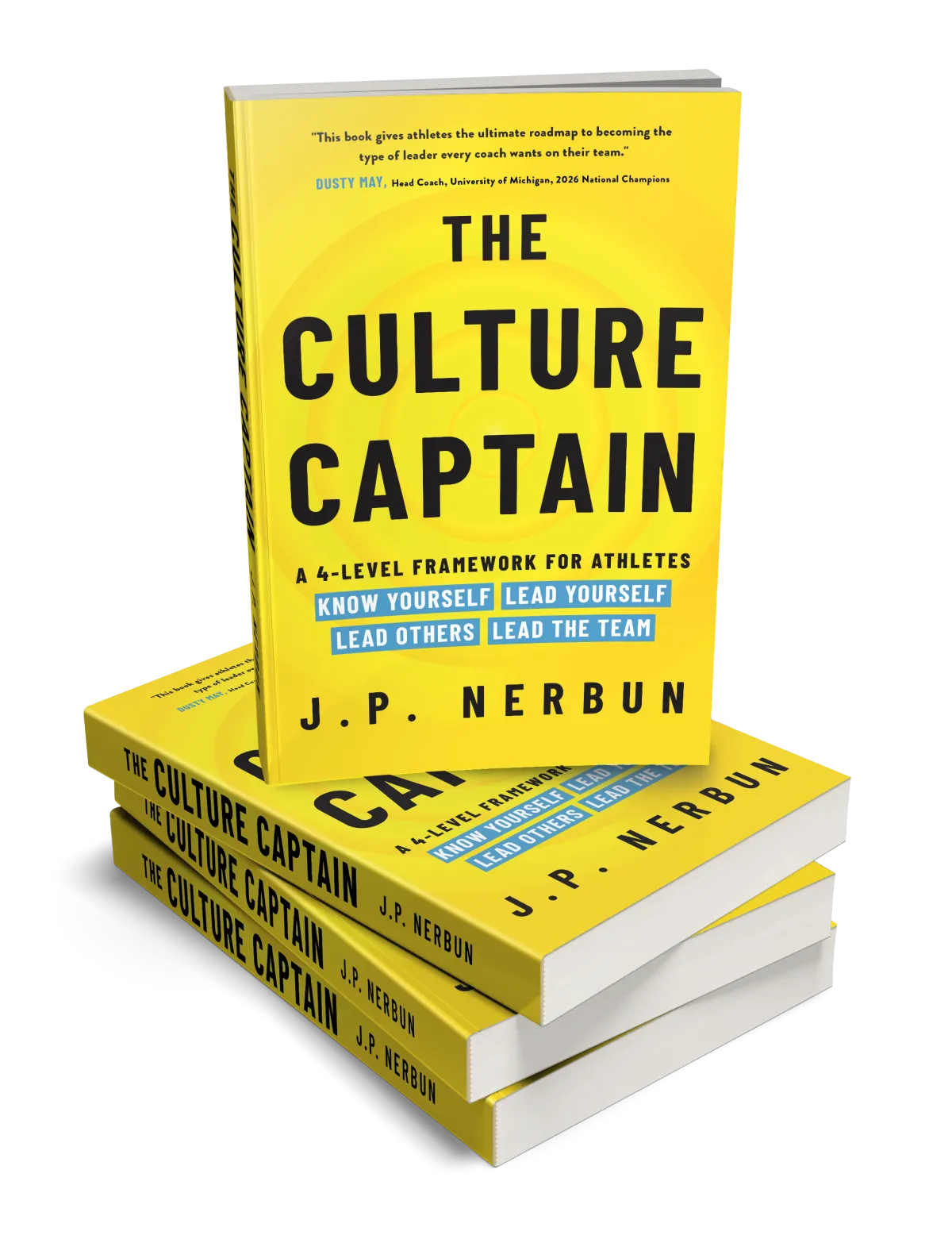
The Culture Captain by JP Nurbun
This episode draws on the book's final chapter, leading from the bench, and the stories of athletes like Abby Wambach and Tom Brady who led without always starting. Available on Amazon, with a free field guide at culturecaptain.net.
KEY TAKEAWAYS
A tight friend group isn't automatically a toxic clique. Betsy's litmus test isn't closeness; it's exclusion. Three teammates getting dinner together isn't a clique. Three teammates who never let anyone else in, on the bus, at the basket, in conversation, is.
Every athlete doesn't need to feel close to every teammate, just to someone. Betsy's standard for team health isn't universal closeness. It's making sure everyone has at least one strong connection somewhere on the roster, whether that's a teammate or a coach. Nobody being completely alone is the goal, not full inclusion in every friendship.
Most teams don't have a culture of feedback. They have one or two truth-tellers? After 23 seasons as a head coach, Nate said he's rarely seen more than a handful of players who were actually comfortable calling teammates out. Betsy's reframe: stop expecting comfort before the behavior. Discomfort is the price of admission, not a sign something's wrong.
Give players a script for feedback and it's still excruciating, and that's normal. JP's volleyball team exercise had players practice giving feedback they knew was coming, fully staged and fully rehearsed, and it was still agonizing for them to deliver. The lesson for coaches: one training session won't make hard conversations comfortable. Expect reps.
We're good at judging quitting after the fact and bad at examining the cost before it. Nate's framing: coaches and parents tend to evaluate a player's decision to leave a team only in hindsight, as a character judgment. What's missing is the upfront conversation about what a player is actually getting from staying, and what staying is costing them.
Quitting can be the most self-respecting decision a captain ever makes. Betsy shared her own story: a team captain, voted in by her peers, who left a Division I program midseason because she'd lost herself in an unhealthy environment. Her point: being a good teammate starts with being able to lead yourself, and sometimes leading yourself means walking away.
ACTION ITEMS FOR LEADERS AND COACHES
NAME YOUR TEAM'S FRIEND GROUPS OUT LOUD
Map out who naturally clusters together, then check whether any group has an open door policy or a closed one.
RUN THE PREPARED FEEDBACK DRILL
Have each player write one thing they do that hurts team culture, then practice giving and receiving that specific feedback with a partner this week.
ASK ONE PLAYER THE COST QUESTION
Before assuming someone should stick it out, ask them directly what they're getting from staying and what staying is costing them.
ESTABLISH A PERMISSION SLIP FOR CHALLENGE
As a team, write down what it looks like, and doesn't look like, to call a teammate out, before the moment you actually need it.
Get notes and tools at tocculture.com | Join TOC Coach — community, courses, and live coaching | Better Coaches. Better Leaders. Better Culture.
