
Losing Doesn’t Make You a Loser—These 6 Things Do!
AFL legendary coach Craig McRae boasts an extraordinary 80% win rate in close games (matches decided by 12 points or fewer). He holds one of the highest winning percentages in tight finishes in AFL history.
After McRae’s Collingwood Magpies lost a heart-stopping 2022 qualifying final to the Geelong Cats, a reporter asked him in the post-game press conference: “You’ve won a lot of tight games, but you haven’t lost a lot. What’s the emotion in there?”
His initial response was direct: “We want to act like winners.”
He then went on to address the reaction of several players who collapsed onto the turf in despair after the final siren:
“I must admit, the siren goes and there's half a dozen of our guys laying on the ground. For me, that's not a winner. That's acting like a loser... We lost the game, but we're not losers. There is a difference. I said that for the lifetime that I'm sitting in this chair: if we don't win, don't lay on the ground.”
McRae’s reaction to defeat mirrors Giannis Antetokounmpo’s famous response when asked if the Milwaukee Bucks’ early exit from the 2023 NBA Playoffs made the season a failure.
Being a loser isn’t defined by losing a game—it’s defined by how we react to the loss. Reflecting on this mindset, I frequently see sports leaders (both coaches and athletes) fall into six common "loser" behaviors:
6 Ways We Act Like Losers
1. Emotionally Falling Apart: We act as though someone has died—losing sleep and treating people poorly. Roger Federer modeled a better path: devastation is not the only acceptable response to defeat.
2. Failing to Congratulate Opponents: We walk off without really acknowledging our opponents victory. Sometimes I see leaders even get into arguments. Former Phoenix Suns head coach Monty Williams showed us how to be a winner after losing the NBA Finals when he walked into the Milwaukee Bucks’ locker room to congratulate them.
3. Blaming, Complaining, and Defending: We point fingers at referees, players, weather, or bad luck. We make excuses instead of taking accountability for our own role in the outcome.
4. Downplaying the Opponent: We focus exclusively on how poorly we played, failing to give credit to the other team’s execution and performance.
5. Ignoring the Positives: We obsess over mistakes while completely ignoring the things we executed well. This fixation blinds us to progress.
6. Hitting the Reset Button: We abandon the process or strategy we previously committed to, making drastic, reactionary changes out of frustration.
None of these behaviors are merely bad sportsmanship—they actively work against our ability and desire to learn and grow from losses.
We compete to strive for excellence and find our best. As leaders, let’s never lose sight of that.
—J.P. Nerbun
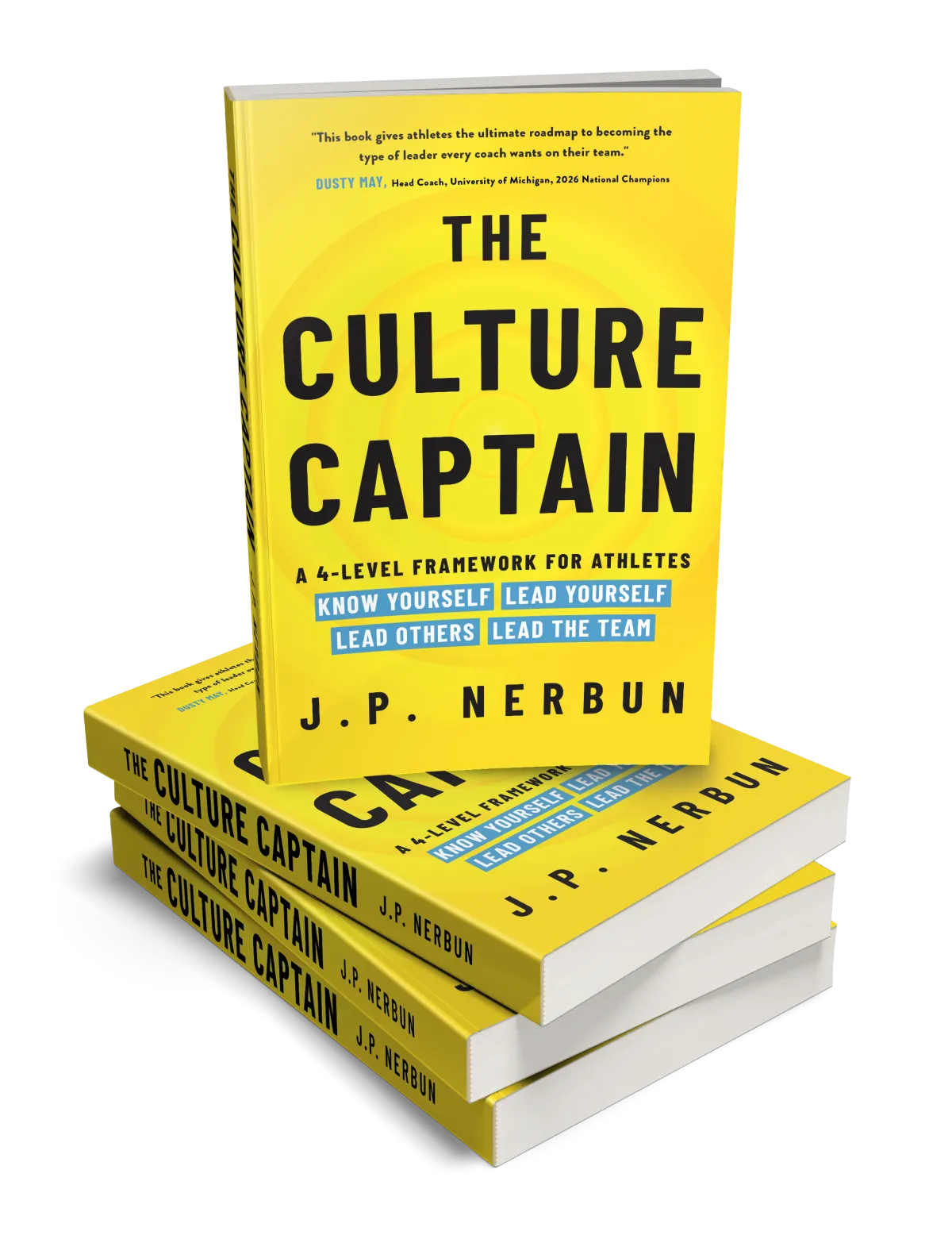
If you want to help yourself and your athletes develop a true competitive mindset, pick up a copy of The Culture Captain—a book providing a 4-Level Framework for Athletes to Know Yourself, Lead Yourself, Lead Others, and Lead the Team.


