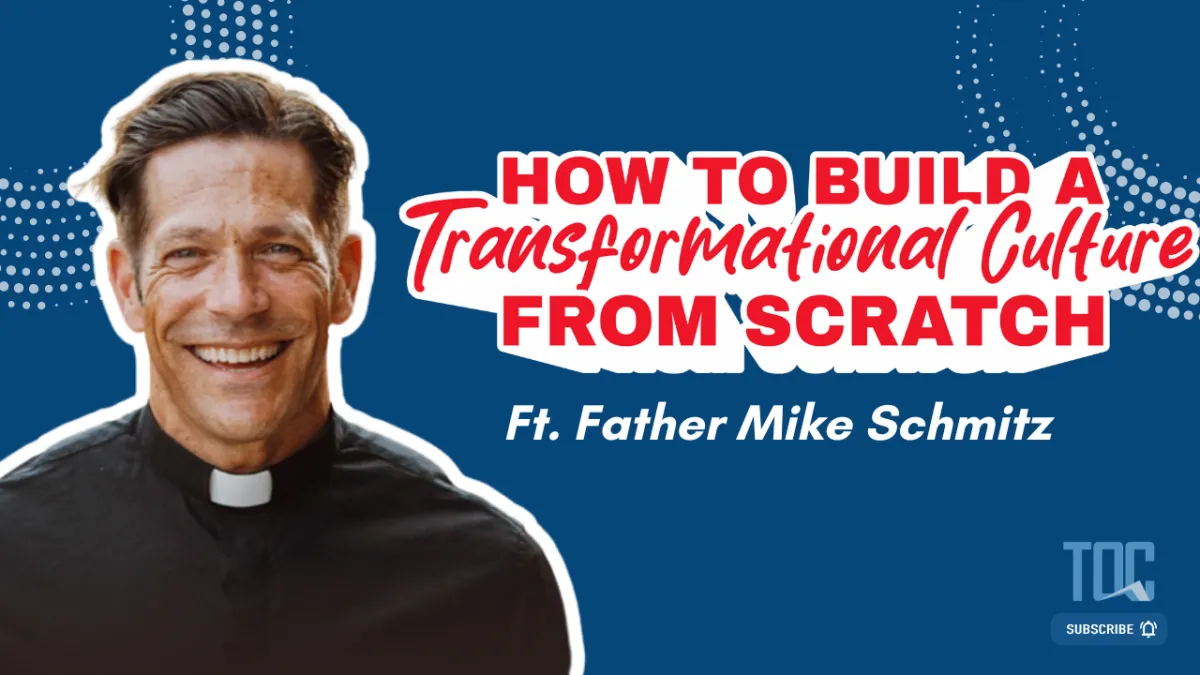
453: How to Build a Transformational Culture from Scratch | Father Mike Schmitz
Podcast accessible on: iTunes | Spotify | YouTube
The discussion with Father Mike Schmitz opens with a candid look at the pressure coaches face to keep all the plates spinning , recruiting, film, family, faith, and how to make sure the most important things don’t quietly get crowded out. Father Mike introduces the “rock analogy,” a powerful reframe for understanding the hidden cost our busy seasons place on the people we love most.
From there, the conversation moves into what it actually takes to build a culture where people feel seen, known, and loved , the three-word philosophy that has defined 15 years of transformational work at UMD. Father Mike shares the practical frameworks he used to grow a near-empty Newman Center into a thriving community, including how to identify the right emerging leaders (using the FACT and FACE acronyms), how to structure small groups within a larger team, and why creating space for honest feedback from the people you lead is one of the most powerful things any leader can do.
The episode closes with a timely conversation about leading the next generation. Father Mike makes a compelling case that Gen Z , despite being the most digitally connected generation in history , is quietly desperate for real, in-person relationships. The coaches who learn to offer that will have an unmatched competitive advantage.
KEY TAKEAWAYS
Priority is singular by definition.
The word ‘priority’ was always singular. We corrupted it when we made it plural. As a leader, you have one first thing. Everything else is second. Knowing your non-negotiable anchor , and protecting it , is what keeps you from living a compromised version of your life.
Your family carries your season too.
When you hand someone the rock and ask them to hold it through a demanding stretch, they need a timeline. The best coaches learn to communicate clearly: here’s when I take the rock back. That honesty transforms sacrifice into partnership.
Guilt is a signal that you’re not yet convinced.
When you feel guilty about saying no, it usually means you haven’t fully made the decision. The leaders who operate without guilt know their yes and their no are the right answer. Conviction is what liberates you.
Culture is built on three words: Seen. Known. Loved.
Father Mike built a thriving community around one simple question: does every person who walks through the door feel seen, known, and loved? That’s not soft, it’s the foundation of every culture that retains great people and produces transformation.
Gen Z wants real, and you can give them that.
By the time students reach college, they’re quietly burned out on virtual connection. The coach who puts down the phone, looks them in the eye, and gives their full presence is doing something rare and powerful. That’s the new competitive edge.
Reframe your role: you’re not just a coach.
Father Mike landed on ‘spiritual fatherhood’ as the lens that unified all his roles , teacher, counselor, encourager, corrector. For coaches, a similar reframe is available: mentor. When you see yourself as a mentor first, the hard conversations become easier and the relationships go deeper.
IMPACTFUL QUOTES
“The word ‘priority’ was always singular. You can’t have priorities. There is one first thing , and everything else comes after that.” — Father Mike Schmitz
“I can help in every way I can. But then I’m limited. And when I hit that point, I can say no , and wish I could say yes , but I don’t feel bad. It doesn’t take my energy away from me.” – Father Mike Schmitz
“Every student who arrives should be seen, known, and loved. That was our culture in three words , and it still is.” — Father Mike Schmitz
ACTION ITEMS FOR LEADERS
Put these into practice this week:
Identify your true priority
Write down the one thing that cannot be compromised without costing you your sense of self and effectiveness as a leader. Schedule it first , every day this week before anything else gets added.
Have the timeline conversation
If someone in your life is currently ‘holding the rock,’ have a direct conversation. Tell them specifically when the demanding stretch ends and how you plan to invest in them when it does.
Audit your next three ‘yeses’
Before you say yes to the next request that comes in, ask: am I saying yes because it’s the right answer, or because I’m afraid of how it looks to say no? Practice saying no with conviction, not apology.
Apply the FACT filter to your roster
Look at your team and identify two or three people who are Faithful, Available, Contagious, and Teachable. These are your next leaders. Schedule intentional one-on-one time with each of them this month.
Create one feedback channel
Establish a way for your players or team members to tell you what’s not working, without fear of consequence. This could be anonymous, one-on-one, or open. The format matters less than the genuine invitation.
Reframe your role in writing
In one sentence, write down how you see your role, not your title or your job description, but the deepest version of what you’re trying to do for the people you lead. Post it somewhere you’ll see it daily.
