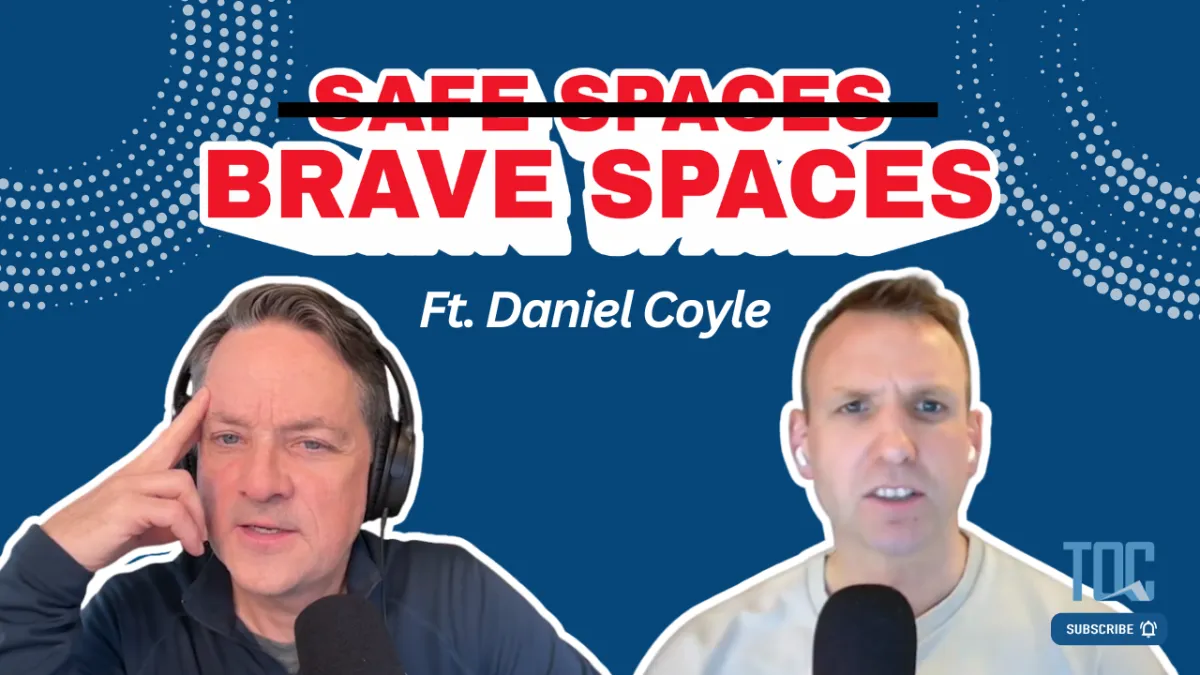
450: Brave Spaces, Big Questions & the Art of Coaching | Daniel Coyle Part 2
The Coaching Culture Podcast Notes
450: Brave Spaces, Big Questions & the Art of Coaching | Daniel Coyle Part 2
Podcast accessible on: iTunes | Spotify | YouTube
Part 2 with Daniel Coyle picks up where the conversation left off — diving deeper into the mechanics of connection, the difference between complicated and complex systems, and what it really looks like to build a coaching culture from the inside out.
Coyle shares rich examples from 13 years inside the Cleveland Guardians organization, unpacks the difference between controlling and relational attention, and introduces the concept of "yellow doors" — the small moments of openness that lead to a flourishing life.
The episode closes with a deeply personal reflection on a milkman-turned-little-league-coach who shaped Coyle's understanding of what great coaching feels like — and a reminder that meaning lives in moments, not strategies.
Key Takeaways
Brave Spaces Over Safe Spaces: True psychological safety isn't about comfort — it's about courage. Rename and reframe your environment as a place where people are brave enough to take risks, not protected from them.
Vague Rules Spark Agency: A few broad principles outperform a long list of specific rules. Vague rules act as "riverbanks" — they set direction while giving people the freedom to self-organize, take ownership, and navigate complexity on their own.
Complicated vs. Complex — Know the Difference: Coaching a team is complex, not complicated. Complicated problems need experts and step-by-step plans. Complex problems require curiosity, probing, and learning as you go. Treating a complex situation like a complicated one is a recipe for frustration.
Growth Happens From the Inside Out: You can't force development. The Guardians ditched expert-led coach training in favor of a simple question: "Who's the best coach you ever had, and what did they do?" The energy in the room transformed. Real growth is sparked by curiosity, not coercion.
Two Types of Attention — Use Both: Task (controlling) attention gets things done. Relational (connective) attention builds bonds and sees the whole person. The best coaches use task attention in service of relational attention — not as an end in itself.
Notice. Ask Questions. Shut Up and Listen: Coyle's three-step summary of the book. The leaders who create the most thriving environments aren't the ones with the best answers — they're the ones paying the deepest attention.
Yellow Doors Change Everything: Most of us only notice green (go) or red (stop) signals. Yellow doors are the "maybes" — the slightly uncomfortable openings to something new. One yellow door a day changes the texture of your life and your relationships.
Action Items for Leaders
Rename Safety to Bravery: Audit the language you use around your team culture. Replace "safe space" with "brave space" — then ask: what would it look like for your athletes to act brave, not just feel safe?
Simplify Your Team Rules: If your team norms exceed five items, cut them. Aim for 2–4 broad principles that give people agency to navigate. Test them: do they spark energy, or just compliance?
Run a Coach Development Question: Gather your staff and pose: "Who's the best coach you ever had, and what specifically did they do?" Let conversation emerge. No slides. No expert. Just shared discovery.
Schedule One Yellow Door This Week: Identify one conversation you've been avoiding or one person you've never really connected with. Walk through that yellow door. It doesn't have to be big — it just has to be open.
Do a Daily Rando: Call one person each day for no reason. No agenda. Just connection. Coyle does this deliberately to keep his relational world alive — and it's something coaches can model for their athletes too.
