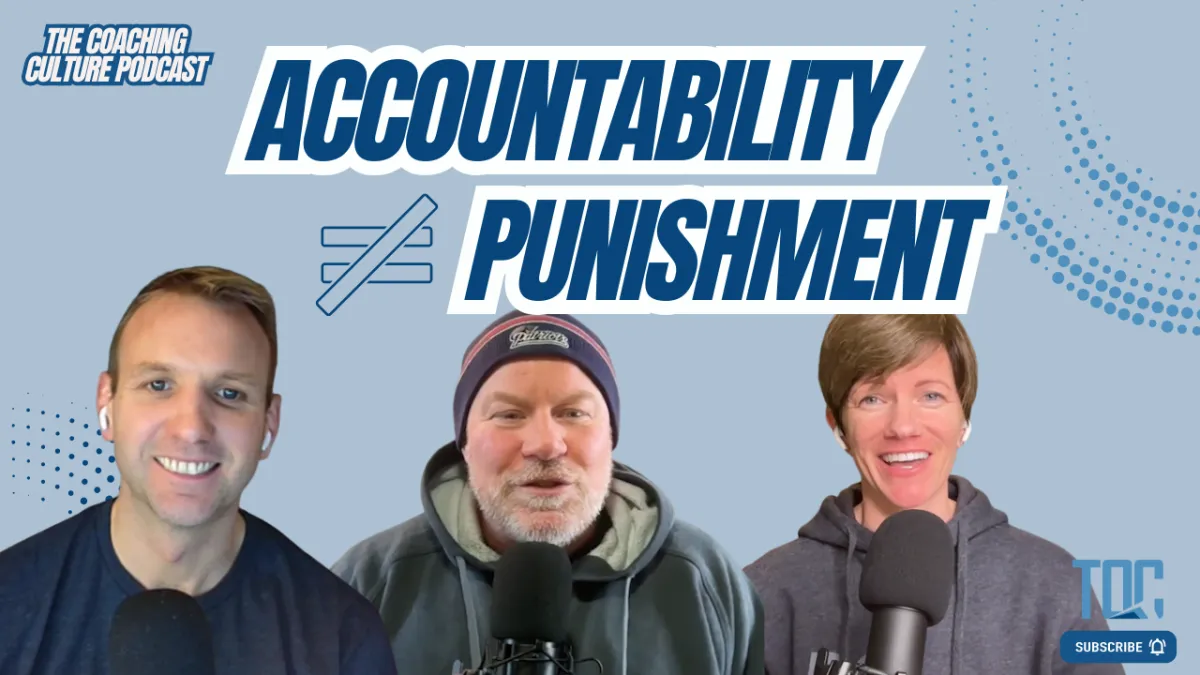
440: Sports Coaching 101: How to Build Accountability and Mutual Trust in Your Team Culture
Podcast accessible on: iTunes | Spotify | YouTube
The conversation centers on why the word "accountability" often triggers a negative "drawback" response and how leaders can transform it into a productive, trust-building tool. The hosts explore common pitfalls, such as inconsistency (treating star players differently) and a lack of clarity in standards. They argue that true accountability is not about punishment but about individual and collective responsibility for choices, words, and team culture.
Key Takeaways
Reframing the Terminology: To shift the negative connotation of "consequences," consider using the word "outcomes". Similarly, accountability can be framed as responsibility, discipline as education, and feedback as information.
The Power of Positive Accountability: Accountability isn't just for correction; it can be a tool for reinforcement. Praising an athlete by comparing their current performance to a high standard they’ve met is a form of positive accountability.
Skill vs. Fear: Many athletes avoid holding teammates accountable not because they are "afraid," but because they lack the specific communication skills to do so effectively.
Integrity and Self-Ownership: For accountability to have credibility, it must start with the leader. Admitting your own mistakes (e.g., a coach or veteran player owning a lapse in effort) makes it safer for others to be held to the same standard.
Transparency and Expectations: Trust breaks down when consequences are invisible or inconsistent. Leaders must clearly define expectations around what happens when standards aren't met before the situation arises.
Impactful Quotes
"Accountability at its core is responsibility... You are a person that collectively is responsible for taking care of the culture of this program." — Betsy Butterick
"Accountability builds trust. And when they don't feel like accountability is equal there, that's where it's breaking down trust." — JP Nerbun
"We misunderstand discipline—it does not mean to punish; it means to teach, to disciple." — Betsy Butterick
"If you haven't had those conversations [about specific behaviors], then there's just confusion... athletes don't know how to hold each other accountable because they can't see it when it's happening or not." — Nate Sanderson
Action Items for Leaders
Conduct a "Mutual Expectations" Audit: Ask your team, "What do you need from me to be successful?" and share what you need from them in return. Explicitly invite them to hold you accountable to your end of the deal.
Define "Above the Line" Behaviors: Move away from vague terms like "working hard". Facilitate a session to co-create specific, observable behaviors that define your team standards.
Teach Communication "Reps": Don't assume athletes know how to confront a teammate. Use case studies—make-believe examples of broken standards—to let them practice those hard conversations in a low-stakes environment.
Shift the Timing of Conversations: Instead of only having accountability talks after a failure, ask questions before: "What's your plan for this next step? How can I support you in meeting the standard?".
Model "Owning the Mistake": The next time you fail to meet a standard you’ve set, acknowledge it publicly before anyone else can. This demonstrates that the standard is more important than your ego.


